> For the complete documentation index, see [llms.txt](https://www.opentimeclock.com/docs/llms.txt). Markdown versions of documentation pages are available by appending `.md` to page URLs; this page is available as [Markdown](https://www.opentimeclock.com/docs/blog2/november-2025/biometric-time-tracking-system-accuracy-through-technology.md).
# Biometric Time Tracking System:Accuracy Through Technology
Enhance workforce accuracy with a biometric time tracking system. Use advanced fingerprint or facial recognition to eliminate errors, prevent buddy punching, and streamline attendance management.
It is relevant that every business should track the time of its employees. Paper timesheets or punch cards have numerous issues. Employees may forget to clock in, write false timings, or even mark attendance on behalf of their friends. These problems waste companies ' funds and present unfair scenarios.
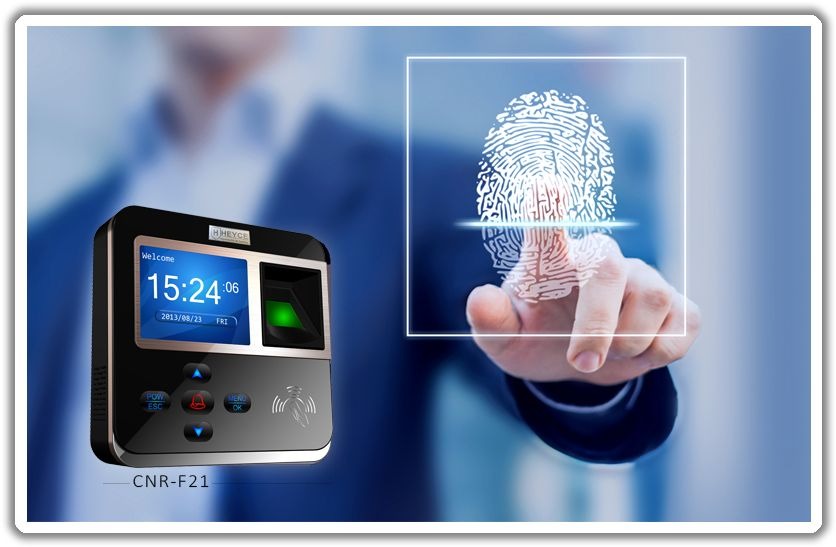
A biometric time clock is a solution to these issues, leveraging technology. It utilizes distinctive body parts, such as fingerprints or facial recognition, to identify employees. Nobody can deceive the system, as all biometric data is unique to one person. This ensures that attendance tracking is entirely accurate and truthful.
Several companies have migrated to biometric systems because they are dependable and user-friendly. Employees need to scan their finger/ face, and the system automatically records their time. No space to make a mistake or to commit fraud. This saves time for both the workers and the managers.
### What is a Biometric Time Tracking System
A biometric time tracking system refers to an online application used to document employee attendance based on their biometric data. The most widely used methods are fingerprint recognition, facial recognition, or iris scanning. Others include hand geometry and voice recognition.
Upon installing the system, every employee enters their biometric data. In the case of fingerprint systems, they swipe their finger a couple of times. The system stores a unique print of each individual's fingerprint. To perform face recognition, the system captures photos and stores their corresponding faces.
Once employees are registered, they only have to scan their fingerprint or appear before the camera to check in and out. As soon as they enter the system, their biometric information is compared, and the time is logged. The entire process is completed in 1-2 seconds. It is far more expedient than typing passwords or swiping cards.
Using a reliable[ time clock system](https://www.opentimeclock.com/) helps eliminate common attendance problems and ensures accurate payroll processing every time.
### Why Biometric Systems are More Accurate
Biometric time tracking systems are the most accurate way to record attendance. Here is why they work better than old methods. First, biometric data is unique to each person. Your fingerprint is different from everyone else's fingerprint. No two people have the same face or iris pattern. This means the system cannot confuse one employee with another. Every time stamp is linked to the correct person.
Second, biometric systems stop buddy punching completely. Buddy punching happens when one employee clocks in for another employee who is not there. With traditional punch cards or passwords, this is easy to do. But you cannot fake a fingerprint or face. Each person must be physically present to mark their attendance.
Third, these systems eliminate human error. When employees fill paper timesheets, they make mistakes. They might write 8:00 AM instead of 8:30 AM. They might forget to sign out. With biometric systems, the technology records exact times automatically. There are no manual entries, so there are no errors.
### Types of Biometric Time Tracking Systems
There are different types of biometric systems available. Each type uses different body features to identify employees. Understanding these types helps you choose the right one for your business.
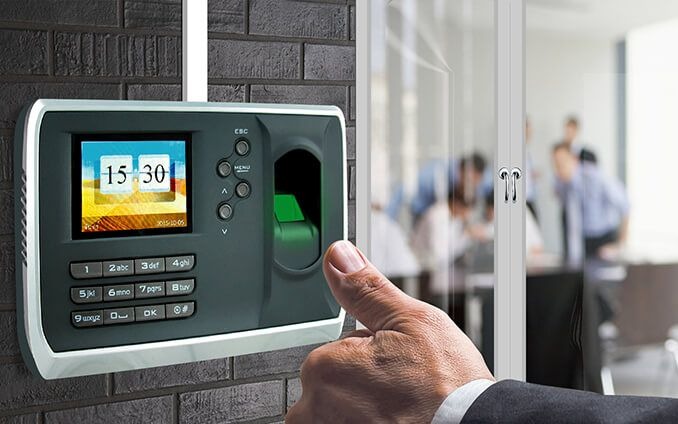
Fingerprint Recognition is the most popular type. Employees place their finger on a scanner, and the system reads the unique patterns of their fingerprint. These systems are affordable and very reliable. They work well in most environments. The scanners are small and easy to install at entry points.
Facial Recognition systems use cameras to identify employees by their face. Employees just look at the camera, and the system recognizes them instantly. This is very convenient because it is completely contactless. Workers do not need to touch anything. This became especially important during health concerns about shared surfaces.
Iris Recognition scans the colored ring around the pupil of your eye. Each person's iris has unique patterns. These systems are extremely accurate but usually cost more than fingerprint or face recognition. They are often used in high-security environments.
Hand Geometry systems measure the shape and size of a person's hand. Employees place their hand on a reader, and the system records measurements. These systems are less common now because fingerprint and face recognition are more advanced.
Most businesses choose between fingerprint and facial recognition systems. Both are reliable, affordable, and easy to use. The[ employee time tracking](https://www.opentimeclock.com/) solutions available today offer various biometric options to fit different workplace needs.
### Benefits of Using Biometric Time Tracking
Switching to a biometric time tracking system brings many benefits to your business. These advantages improve operations and save money.
Eliminates Time Theft: Time theft costs businesses billions of dollars every year. When employees arrive late but claim they were on time, or when they take long breaks without recording them, the company loses money. Biometric systems stop this completely. Every clock-in and clock-out is accurate and cannot be faked.
Saves Time on Payroll: Calculating payroll from paper timesheets takes hours. Someone must collect all the sheets, check the times, add up hours, and calculate pay. With biometric systems, all this data is already digital. Payroll software can import the information directly. This reduces payroll processing time from hours to minutes.
Reduces Administrative Work: Managers spend less time dealing with attendance disputes. When an employee claims they were present but records show otherwise, the biometric data settles the argument immediately. There is clear proof of when each person was at work.
### Conclusions
A biometric time tracking system is the most accurate and reliable way to manage employee attendance. It uses unique body features like fingerprints or faces to identify workers, making fraud impossible. This technology eliminates buddy punching, reduces payroll errors, and saves administrative time.
The benefits of biometric systems go beyond accuracy. They improve workplace security, increase employee accountability, and provide valuable data for better management decisions. While there is an initial cost, the return on investment is quick and substantial.
### FAQs:
#### 1. Is biometric data safe and secure?
Yes, biometric data in time tracking systems is very secure. The systems do not store your actual fingerprint or face photo. Instead, they convert your biometric features into encrypted mathematical codes.
#### 2. What happens if the biometric system cannot read my fingerprint?
If the scanner has trouble reading your fingerprint, there are several solutions. First, clean your finger and the scanner surface, then try again. If you have a cut or injury on your finger, register a different finger as a backup.
#### 3. Can biometric time tracking systems work for remote employees?
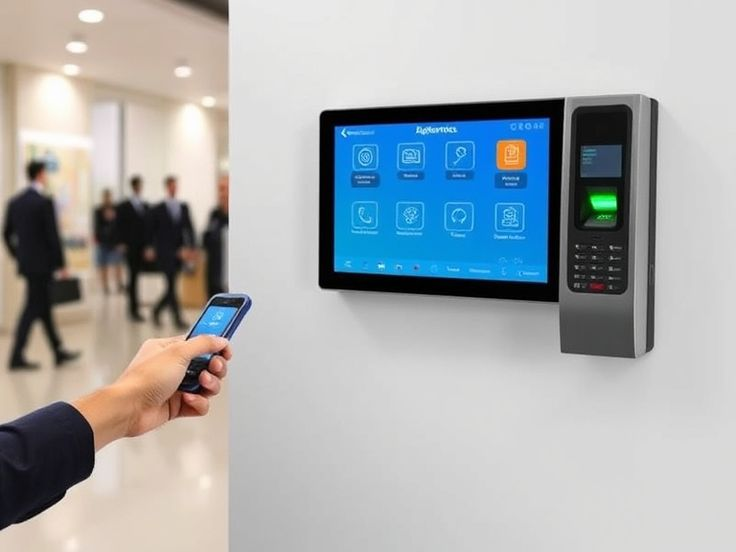
Traditional biometric systems with physical scanners are designed for on-site employees. However, some modern solutions combine biometric verification with mobile apps. Remote workers can use facial recognition or fingerprint scanning on their smartphones to clock in and out.
#### 4. How long does it take to set up a biometric time tracking system?
The setup time depends on your company size. Installing the physical hardware usually takes a few hours to a day. Registering employees is quick - about 2-3 minutes per person. For a company with 50 employees, the entire registration process takes around 2-3 hours.
#### 5. Are biometric time tracking systems expensive?
The cost varies based on the type of system and the number of employees. Basic fingerprint systems start around $200-500 per device. Facial recognition systems typically cost $500-1500 per device. You also pay monthly fees for the software, usually $2-5 per employee.
---
# Agent Instructions
This documentation is published with GitBook. GitBook is the documentation platform designed so that both humans and AI agents can read, navigate, and reason over technical content effectively. Learn more at gitbook.com.
## Querying This Documentation
If you need additional information that is not directly available in this page, you can query the documentation by asking a question.
Perform an HTTP GET request on the following URL with the `ask` and `goal` query parameters:
```
GET https://www.opentimeclock.com/docs/blog2/november-2025/biometric-time-tracking-system-accuracy-through-technology.md?ask=&goal=
```
`ask` is the immediate question: it should be specific, self-contained, and written in natural language.
`goal` is what the user is ultimately trying to achieve, the reason they need the answer. Sharing it helps GitBook give you a better, more relevant answer. A goal is most helpful when it describes the outcome the user wants rather than restating the question. For example, with `ask=how do I create an API token`, a goal like `automate deployments from our CI pipeline` lets GitBook tailor the answer to that use case.
The response will contain a direct answer to the question and relevant excerpts and sources from the documentation.
Use this mechanism when the answer is not explicitly present in the current page, you need clarification or additional context, or you want to retrieve related documentation sections.