> For the complete documentation index, see [llms.txt](https://www.opentimeclock.com/docs/llms.txt). Markdown versions of documentation pages are available by appending `.md` to page URLs; this page is available as [Markdown](https://www.opentimeclock.com/docs/blog2/january-2026/why-your-business-needs-a-centralized-time-tracking-dashboard.md).
# Why Your Business Needs a Centralized Time Tracking Dashboard
See why a centralized time tracking dashboard boosts productivity, accuracy, and visibility while cutting costs and inefficiencies.
## Why Your Business Needs a Centralized Time Tracking Dashboard
With the velocity at which today’s business world is moving, the most sought-after resource becomes time, especially for large companies. However, many organizations use time tracking methods that are inefficient. Disconnected tools, spreadsheets, and even manual processes can lead to inaccurate time tracking, wasted time in management, and a host of issues for decision-making.
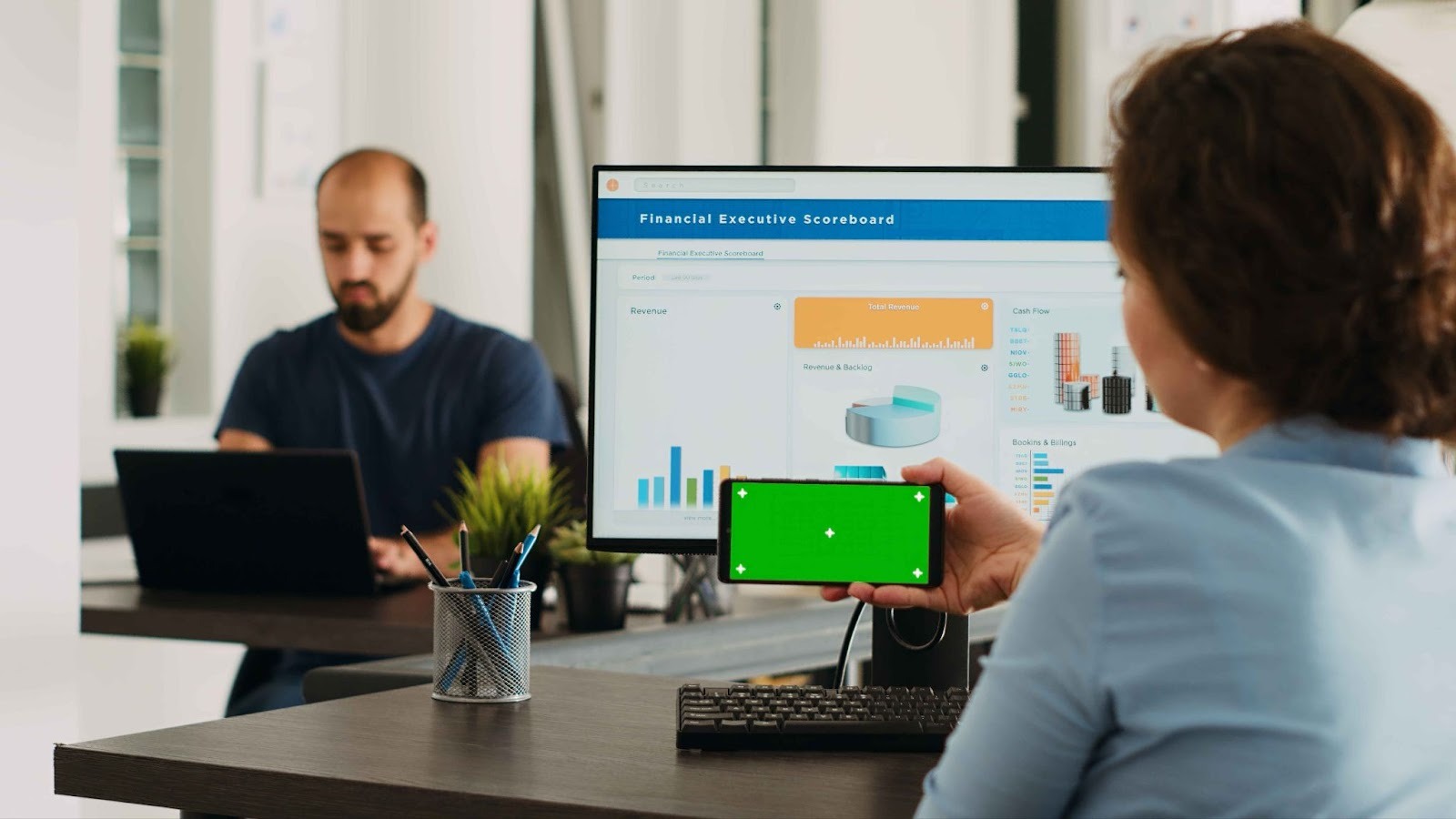
Using tools such as[ time tracking dashboards](https://payroll.org/), it is now easier than ever to organize and simplify all the data related to time management in one comfortable location. No matter the size of the team that one manages, having a single source for time tracking data is imperative. It is a strategic necessity.
This article is meant to highlight the functionalities of a time tracking dashboard, how it helps in the area of productivity and/or compliance, and the benefits of tracking time for business companies, and for[ OpenTimeClock](https://www.opentimeclock.com/) in particular.
### What Is a Centralized Time Tracking Dashboard?
With time tracking dashboards, companies can leverage[ digital time tracking platforms](https://www.opentimeclock.com/feature-approval-of-time-records.html) that store and consolidate all data related to their employees’ time in a single, unified display. It is now easier than ever to eliminate the need to manage separate systems for optimal time tracking, attendance oversight, overtime handling, and payroll prep reporting.
Key aspects often consist of the following:
* Employee clock-in and clock-out records
* Tracking of overall working hours as well as overtime
* Monitoring of breaks and shifts
* Attendance status in real-time
* Payroll and compliance reports that can be exported
Since all data is located in one dashboard, management and ownership are able to see how organizational time is allocated.
### The Growing Importance of Accurate Time Tracking
The configuration of workplaces has changed. Remote work, hybrid teams, flexible work hours, and gig workers are in place today. This combination adds to the challenge of ensuring accurate employee time tracking.
The U.S Department of Labor lists time tracking errors as one of the most prevalent reasons for wage and hour violations. Mistakes are often the result of inadequate systems and/or manual processes. A dashboard that is designed for time tracking can assist organizations in remaining compliant while also reducing the workload from administrative tasks.
Tracking the time employees work manually has been shown by the American Payroll Association to result in loss of money and trust from employees because of the high cost of payroll errors that result from manual tracking.
### Common Problems Without a Centralized Dashboard
Challenges in productivity, accuracy, and operational efficiency are common, mainly when businesses do not rely on a centralized system. A disconnected system for time tracking can lead to costly problems that go beyond time inefficiencies.
#### 1. Data Inconsistency
When time data is recorded across multiple platforms, a number of inconsistencies can arise. One employee might record their hours in a spreadsheet, while another does so in a mobile application. The payroll might depend on notes that are handwritten or emails that are submitted. With so many disjointed sources, the reconciliation of data is nearly impossible.
As a result, payroll and[ managers have to dedicate time to check](https://www.opentimeclock.com/feature-clock-points.html) and recheck their records to correct inconsistencies and clear disputes. In the long run, the result of the time and effort dedicated to these administrative tasks the data loses inconsistencies and increases the chances that errors will appear in the payroll.
#### 2. Time Theft and Buddy Punching
When there is no centralized oversight, the risks of time theft increase. Employees may arrive late, leave early, take extended breaks, or clock in for one another, in what is referred to as buddy punching.
Although each of these situations is not costly alone, their effects on the total labor costs in weeks or months can be significant. Without a centralized system, these patterns can be impossible to identify, and the fairness of accountability, as well as the enforcement, is compromised.
#### 3. Payroll Delays
The process of payroll is even more complicated and time-consuming if the data is not organized. The payroll department has to manually check and verify time cards and timesheets and follow up on missing entries. Then, they have to confirm approvals with different managers, which can take several days, especially with big teams.
Delayed payments can lead to administrative pressure and can negatively impact employee morale and trust. With a more efficient system, time data is complete and approved, so there is no need to chase after time entries.
#### 4. Limited Visibility
The absence of time tracking centralization creates a lack of understanding among managers regarding employee attendance and how work is distributed. It is impossible to tell who is absent, who is working, or who is logging overtime, especially if it's a whole team.
Without understanding Parr's changes, there is a greater imbalance in work distribution. Managers are forced to rely on assumptions rather than data, which create a morale problem and can impact performance.
### How a Centralized Time Tracking Dashboard Improves Productivity
Centralized tracking dashboards consistently improve productivity across the organization. By presenting data in a quick, easily comprehensible manner, businesses can minimize structuring issues, handle workforce planning issues, and improve data reporting.
#### 1. Insights in the present moment
With the aid of a central dashboard, managers have complete oversight of the workforce. They can see who is clocked in, who is out, and who is close to overtime. This quick insight provides managers with the opportunity to respond to sudden absences, reallocate tasks, and adjust work hours so that processes remain operational.
#### 2. Less administrative work
Manual time tracking is time-consuming, requiring data entry, verification, and daily absences. A central system eliminates these tasks. All needed calculations to manage hours, breaks, and overtime are automated.
#### 3. Employee accountability
When time is tracked consistently and fairly, productivity increases, attendance improves, and time disputes decrease. Clear records are present to avoid confusion or disputes. Employees feel they are held accountable to keep active and manage their time responsibly during working hours.
#### 4. Data-Driven Enhancements in Organizational Performance
The research substantiating the productivity gains associated with the use of digital workforce tools is compelling. For example, a case study in the Harvard Business Review found that the use of digital workforce management and tracking systems increased operational efficiency and employee accountability in several organizations.
### Financial Benefits for Businesses
Time data management systems are integral to employee cost management, and employee costs are historically the highest single cost for any business. Errors, whether in time data management, time data collection, or time data processing, can lead to compounding or high negative costs over time. Therefore, while a time tracking system will not eliminate labor costs, the business will gain better control over financial performance.
#### 1. Payroll Accuracy
Time tracking systems ensure that employees are compensated for the time actually worked by tracking time. Automated tracking is more sophisticated than relying on employees to record time and pay manually. Tracking errors, such as missed time entries, overtime miscalculations, and duplicate time entries, lead to payroll errors. Employees' pay system errors lead to trust erosion and a negative office culture. Correcting payments is time-consuming and costly.
In addition to high payroll costs associated with employee payment correction, the potential for litigation or regulatory violation is avoided when errors lead to less time to focus on more important business aspects.
#### 2. Budget and Cost Control
Data centralization results in the ability to predict and forecast costs associated with a business's workforce more accurately. History data review and forecasting in workforce contracts, overtime adjustment, absence, and employee count deliver actionable data on cost optimization and resource management.
Organizations that have good visibility into labor hours can budget much better, manage costs associated with hours worked, and mitigate the risk of unanticipated payroll costs. This results in improved cash flow and reduces operating cost variability.
#### 3. Lowered Risk of Compliance Issues
Proper time recording must be done for recording labor law compliance. A paperless, centralized solution builds a digital record for you – a comprehensive, time-stamped record that can be easily archived, accessed, and documented. This record can be invaluable in the case of an audit, inspection, or labor dispute.
When a business reduces its reliance on paper and scattered files, it lessens the risk of incurring a penalty for non-compliance and reduces legal risk.
#### 4. Cost Savings for the Future
The societal financial impacts of time tracking are well known. According to the Society for Human Resource Management, inadequate time tracking can cost a business thousands of dollars in a year for each employee due to payroll mistakes, inadequate compliance, and poorly managed labor.
Improved accuracy and a greater opportunity for cost savings with better workforce optimization and financial decision-making are the benefits of a centralized time tracking dashboard.
### Compliance and Legal Protection
Businesses are legally obligated to record employee punctuality and attendance. Not complying may endanger the business and leave it exposed to fines, sanctions, and litigation.
* A unified system for tracking employee time and attendance allows the business to
* Be compliant with the Fair Labor Standards Act
* Determine overtime
* Comply with record retention mandates
* Be prepared for an audit
Digital systems provide time-stamped records that are hard to modify. This provides legal protection to employers and employees.
### Why Centralization Matters More Than Features
Most companies consider time tracking solutions on the basis of every feature, but the actual benefit is centralization.
A unified system enables:
* One source of truth
* Fewer data silos
* Unified reporting
* Streamlined training
Instead of having managers and employees use multiple systems; a unified system minimizes friction and reduces errors.
### OpenTimeClock and Centralized Time Tracking
OpenTimeClock helps businesses track employee time and attendance and is built on the principle of not overcomplicating things. Businesses can keep track of attendance, work hours, and reports via one dashboard. It is web-based.
Key advantages are:
* Centralized employee time data
* Easy access from multiple devices
* Clear reporting for payroll and audits
* Simple interface for employees and managers
### Impact on Remote and Hybrid Teams
The lack of physical supervision when remote working has made centralized tracking systems and remote working even more critical. Businesses require systems that offer unequivocal remote puzzling when and how actions are being performed.
A time tracking dashboard allows:
* Even tracking, no matter the location.
* Remote workers can face unfounded assessments without fair tracking.
* Distributed teams get coverage.
* This upholds the productivity framework guaranteed to remote employees.
### Data-Driven Decision Making
Time tracking systems are malfunctioning when their scope is reduced to payroll. Unpicked, timed data can declare itself to be the ultimate asset of the company. Time is more than just a number to keep awards.
Businesses may notice:
* Overstaffed and overstaffed time shards.
* Shifts
* Hours of training
* Lost tracers
* Untimed tracking
Centralized systems offer less than optimum structures at the cost of advanced technological systems.
### Scalability for Growing Businesses
Businesses tracking time manually and separately will face systemic failures. Businesses that operate in teams that seem minor. With a high risk of discrepancies, time marking, and wage computations, the operational load and complexity increase.
Time systems are designed for better scaling than most tracking systems. A centralized time tracking dashboard allows for new employees to be integrated and adjusted without concern for improvisation to existing routines. A centralized time tracking process reconfigures its entire tracking system and adapts to the new offices and demands of its new departments.
The use of time-tracking dashboards can lead to more standardization of policies in the organization. As teams expand, the enforcement of policies on attendance, overtime, or breaks becomes tricky. A time-tracking dashboard centralizes the policies and simplifies compliance, thereby fostering equality and reducing confusion.
### Conclusion
The time-tracking dashboard's convenience is in the past. They are now essential for the organization as they improve accuracy, productivity, compliance, and control. Consolidating time data into reliable and trusted dashboards helps organizations manage their workforces with confidence.
Dashboards improve payroll accuracy, support remote teams, and help organizations avoid legal violations. OpenTimeClock is an example of how centralized time-tracking can be effective and convenient for organizations.
Investing in time-tracking dashboards is more about operational effectiveness and transparency. It promotes more equitable business processes rather than increased monitoring of employee behavior.
### FAQ’s
What is the goal of a time tracking dashboard that is centralized?
To increase accuracy, efficiency and decision making by collecting and showing employee time data in a single location.
Is using a time tracking dashboard centralized for small businesses appropriate?
Yes. Because it avoids administrative tasks and expensive payroll mistakes, small businesses benefit the most.
In what way do untracked time systems and centralized time compliance systems differ?
Untracked systems disregard time in a way that is unaccountable, while compliance systems disregard time in an unaccountable manner.
Can centralized untracked time systems support remote employees?
Yes. It offers the same level of untracked time as remote employees.
What is the ideal frequency of businesses when analyzing data from time tracking?
Managers should check dashboards daily for attendance, while they should examine patterns and costs for time untracked on a weekly or monthly basis.
---
# Agent Instructions
This documentation is published with GitBook. GitBook is the documentation platform designed so that both humans and AI agents can read, navigate, and reason over technical content effectively. Learn more at gitbook.com.
## Querying This Documentation
If you need additional information that is not directly available in this page, you can query the documentation dynamically by asking a question.
Perform an HTTP GET request on the following URL with the `ask` and `goal` query parameters:
```
GET https://www.opentimeclock.com/docs/blog2/january-2026/why-your-business-needs-a-centralized-time-tracking-dashboard.md?ask=&goal=
```
`ask` is the immediate question: it should be specific, self-contained, and written in natural language.
`goal` is what the user is ultimately trying to achieve, the reason they need the answer. Sharing it helps GitBook give you a better, more relevant answer. A goal is most helpful when it describes the outcome the user wants rather than restating the question. For example, with `ask=how do I create an API token`, a goal like `build a script that syncs our docs to a CMS` lets GitBook tailor the answer to that use case.
The response will contain a direct answer to the question and relevant excerpts and sources from the documentation.
Use this mechanism when the answer is not explicitly present in the current page, you need clarification or additional context, or you want to retrieve related documentation sections.