> For the complete documentation index, see [llms.txt](https://www.opentimeclock.com/docs/llms.txt). Markdown versions of documentation pages are available by appending `.md` to page URLs; this page is available as [Markdown](https://www.opentimeclock.com/docs/blog1/november-2025/how-to-measure-and-reduce-payroll-leakage-across-departments.md).
# How to measure and reduce payroll leakage across departments
Learn how to measure and reduce payroll leakage across departments. Discover strategies like audits, automated workflows, attendance tracking, and analytics to prevent financial loss.
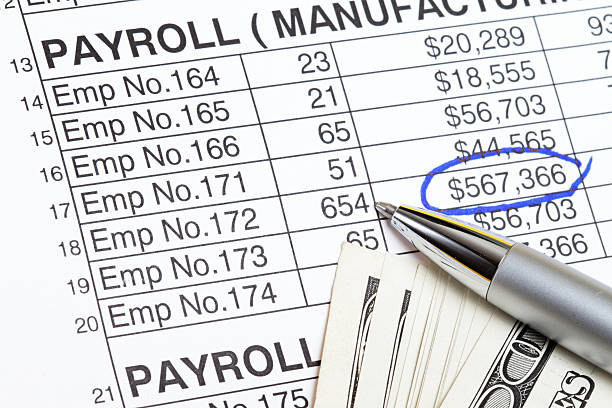
According to studies, 5 to 10 percent of payroll leaks occur every year for companies. Overpayments, faulty timesheets, duplicate payments, and untracked addresses cause these leaks. The problem intensifies because of separate systems and different manual processes for each department. Leakage does not just create a financial impact but also takes a toll on employee confidence and satisfaction.
Their trust in management goes down due to incorrect or delayed salaries. While modern HR and payroll systems help reduce the problem, [proper monitoring](http://opentimeclock.com) and measuring are important. Companies should implement guidelines, automating workflows, and auditing specific to each department.
### Identify common payroll leakages
The first step involves payroll leakage identification. Some of the most common issues involve overpayments, miscalculations of overtime, duplicate payments, and underpayments. Manual timesheets and legacy payroll systems encourage errors. Separate processes in each department ensure discrepancies. Payroll overpayment results from recording employee leave or absence incorrectly. On the same note, incorrect pay structures or allowance mechanisms contribute to leakage. Duplicate payments or unapproved advances due to procedural weaknesses further contribute to the financial loss.
Organizations should audit and reconcile data. Automated alerts and exception reports highlight common errors. It is essential for managers and HR teams to review payroll reconciliation results every month. Further, analyzing historical data aids in identifying trends. This step identifies leakages peculiar to every department. A clear understanding of common issues makes targeted solutions easier to implement.
### Conduct a departmental audit
Departmental audits are crucial to measure payroll leakage. Payroll and [timesheet data](http://opentimeclock.com) must be reviewed for each department. Audits cover overtime, allowances, deductions, and leave balances. Any discrepancies are pointed out by managers and auditors. By this process, departmental audits identify errors and prevent financial loss. Audit trails are also available in automated payroll systems. Data validation and cross-validation detect overpayments and duplicate payments. Standardization of processes related to inconsistent practices across departments is one of the major audit findings.
Audits also scrutinize the records and approvals of employees. The HR and finance teams make proactive decisions due to departmental audits. Quarterly or monthly audits should be carried out by companies. Audit reports provide transparent financial insight to management and senior leadership. Payroll accuracy and compliance are maintained with regular audits.
### Utilizing payroll analytics tools
Payroll analytics tools help in the identification and mitigation of payroll leakage. These tools analyze payroll data from the past and detect unusual patterns. For instance, overtime spikes, duplicate payments, or unapproved bonuses are highlighted through analytics. Payroll dashboards and reports provide real-time visibility. Managers and HR teams can gain actionable insights. Automated alerts and exception notifications reduce manual review processes. Analytics tools provide department-wide breakdowns of data.
Patterns and trends are identified to develop long-term solutions. The reporting and visualization from these tools make decision-making quicker and more accurate. Payroll analytics offers strategic benefits in terms of cost control and error reduction. Companies can also utilize the tool in performing predictive analysis to prevent leakage in the future.
### Standardize payroll policies
Standardized payroll policies minimize leakages across departments. Every department must work on the same rules and regulations for the approval process. Accounting for overtime, allowance, and leave policies must be crystal clear. Standardization reduces disparities and errors. It is also necessary to educate and train employees and their managers on the policies. Payroll policies give scope for checks and automated approval in processes. Standardized policies help to avoid duplicate payments and unauthorized ones.
Monitoring in compliance by senior management at various departments is vital. All updates of the policy along with communication need to be carried out regularly. Policies relating to HR and finance teams must be implemented through system integration and audits. Clear and standardized policies increase accountability and transparency.
### Automate payroll processing
Leakage prevention at its best involves payroll automation. Manual entry and calculation mistakes form a major source of overpayments and missed deductions. Automated systems calculate payroll from employee data, attendance, and leave records. Overtime, bonuses, and deductions are automatically applied. Automation prevents duplicate payments and unapproved adjustments. It’s easy to implement a uniform process across all departments. Automated workflow alerts and exception reports are generated. With real-time insights, managers and HR teams can rapidly correct those errors. Automated payroll systems maintain an audit trail that ensures compliance and accountability.
Automation will generally bring about increased trust and satisfaction among employees. Regular updating and maintenance strengthen accuracy and reliability. Automated integration with accounting and HR systems reduces errors and improves transparency. For companies operating on a global scale, it will boost both operational efficiency and payroll security.
### Accurately record employee attendance
Only then can payroll leakage measurement and reduction be achieved with accurate attendance tracking. Here, the recordation of the proper employee clock-in and clock-out times plays a crucial role. Manual timesheets can generate inaccuracies and exaggerations of information. Biometrics, card swipes, or mobile GPS is used by automated attendance systems. Attendance data integrates with overtime, leave balances, and deductions. Companies can easily track the attendance discrepancies in departments. Alerts and reports help HR and management pinpoint suspicious patterns.
Calculating payroll and reporting does not contain errors after accurate tracking. Your workforce has an air of confidence that work time is appropriately accounted for. Attendance tracking systems, therefore, serve to increase transparency and accountability of workflows. Continuous monitoring eventually prevents overpayments and unauthorized leaves. Historical analysis of attendance in departments highlights problem areas and trends. Payroll reconciliation and compliance are based on accurate data.
### Periodically review and reconcile payroll
Regular payroll review and reconciliation is very essential in controlling payroll leakage. Entries regarding payroll from each department should be validated. Timesheets, overtime, allowances, and deductions should be cross-checked. Reconciliation will catch errors, duplicate payments, and small deductions. Managers and HR teams rectify discrepancies. Automated payroll systems make the reconciliation process easy and enhance reporting.
It is best practice to adopt monthly or quarterly reviews across all departments. Audit trails and exception reports give transparency and control to management. Reconciliation reduces the financial losses and dissatisfaction among employees. Past data analysis shows repeated issues and gaps in the system. Corrective actions and policy updates get instituted as a result of reconciliation. Regular review enhances payroll accuracy and reliability at the departmental level.
### Budget analysis by department
Department-wise budget analysis is an effective payroll leakage reduction approach. The expenses regarding payroll have been tracked by the HR and finance teams for each department. It highlights all the deviations in the budget and unusual expenses. Such analysis helps in identifying overtime, allowances, and unapproved payments. Overstaffing and underutilization get identified across departments. Budget review improves payroll planning and forecasting. Planning of corrective actions by the managers prevents leakage.
Analysis is based on past data and trends. It becomes easy to compare workloads and expenses across departments. Budget analysis provides financial transparency to employees and management. Reports and dashboards provide real-time insights and actionable recommendations. Effective budget analysis helps with the control of long-term payroll performance and costs.
### Implement strong approval workflows
Approving workflows will help reduce payroll leakage. Payment, overtime, and adjustment approvals are handled through a multi-level workflow. Managers and HR teams track system alerts and approval lists. Unauthorized payments and duplicate entries are not possible in this regard. Workflows automated ensure consistency and accountability. Approval delays and errors are pretty easy to find out across all departments.
Workflows need to be aligned with policies and compliance. Employee entries and manager approvals will be tracked digitally. Approval logs serve as a reference for audit purposes and reconciliations. Robust workflows enhance employee and management confidence. The monitoring and reporting of workflows aid process improvements and reduction in errors. Effective workflows control payroll leakage at large and bring transparency into the process.
### Train employees and managers
Training on payroll policies for employees and managers is very vital in reducing payroll leakage. The employees need to be trained on how to record time accurately, report their leave, and submit their expenses. Managers should be trained on payroll policies, steps of approvals, and reconciliations. Training manuals and guides should be available in multiple languages. Awareness and compliance among the employees increase. Regular workshops and refresher sessions reduce errors and discrepancies in the payroll process.
Training cuts down errors and inaccuracies in the payroll process. Employees are confident and make fewer errors. Managers, through training, effectively monitor and implement corrective actions. Training and communication ensure that payroll policies are understood, and consistency of workflow is maintained.
### Use payroll reporting and analytics
Payroll reporting and analytics are strong methods for leakage detection and mitigation across departments. Reports bring into light unusual trends, duplicate payments, and overtime spikes. Dashboards provide visual summaries and department-wise comparisons. Analytics provide insights from historical payroll data and trends. Managers and HR teams plan corrective actions and policy updates.
Regular review of reports improves efficiency and accuracy within the process. Analytics brings automated alerts and exceptions in the fore. It's easy to identify errors and financial leakage across departments. Real-time reporting boosts payroll transparency and accountability. Predictive analytics keep future leakage at bay and costs under control. Reporting and analytics leverage system adoption and employee confidence.
### Monitor and adjust the process
For the reduction of payroll leakage, monitoring and adjustments to processes become indispensable. There is regular review of processes by the HR and finance teams. Plans for improvement are made based on historical data and audit results. Continuous updates should be carried out for the workflows in departments and policies. Monitoring will lead to the identification of trends and recurring issues.
Corrective actions, once implemented, avoid overpayments and errors. Performance of processes through automation and reporting would be tracked with systems. Adjustments would eventually lead to strengthened compliance and transparency. Processes would improve when employee and manager feedback is obtained. Payroll efficiency and accuracy are continually maintained by monitoring. Processes that are adjusted will help control payroll leakage and cost management over the long term.
### Conclusions
Payroll leakage is a critical issue at the core of every organization. The accurate measurement of leakage and its reduction requires a department-wide approach. Identification of common causes, audits, automation of workflows, and analytics helps to reduce leakage. Standard policies, attendance tracking, and approval workflows maintain consistency and ensure transparency. Errors are reduced and compliance improved through employee and manager training. Drive long-term performance and cost control with reporting, budget analysis, and process monitoring on a regular basis.
The financial loss due to payroll leakage decreases, while employee confidence and satisfaction increases. It helps an organization to create payroll systems that are smart, accurate, and efficient through the use of a systematic approach. Multi-departmental collaboration and technology adoption provide a strategic edge to control payroll leakage.
### FAQs:
#### 1. What is payroll leakage?
Payroll leakage is the financial loss due to errors like overpayment, duplicate payments, or untracked leaves. It occurs when payroll processes are inefficient or inconsistent.
#### 2. How can payroll leakage be measured?
It can be measured using audits, reconciliation, payroll reporting, and analytics. Department-wise review and historical data analysis help identify leaks.
#### 3. How do automated payroll processes reduce leakage?
Automation ensures accurate calculations, prevents duplicate or unapproved payments, and integrates time tracking with HR and payroll systems.
#### 4. Why is employee attendance tracking important?
Accurate attendance ensures correct payroll calculation, prevents overpayment, and helps departments maintain consistency in time and leave records.
#### 5. How can companies prevent payroll leakage long-term?
Through standardized policies, strong approval workflows, regular audits, analytics, employee training, and continuous monitoring of payroll processes.
---
# Agent Instructions
This documentation is published with GitBook. GitBook is the documentation platform designed so that both humans and AI agents can read, navigate, and reason over technical content effectively. Learn more at gitbook.com.
## Querying This Documentation
If you need additional information that is not directly available in this page, you can query the documentation by asking a question.
Perform an HTTP GET request on the following URL with the `ask` and `goal` query parameters:
```
GET https://www.opentimeclock.com/docs/blog1/november-2025/how-to-measure-and-reduce-payroll-leakage-across-departments.md?ask=&goal=
```
`ask` is the immediate question: it should be specific, self-contained, and written in natural language.
`goal` is what the user is ultimately trying to achieve, the reason they need the answer. Sharing it helps GitBook give you a better, more relevant answer. A goal is most helpful when it describes the outcome the user wants rather than restating the question. For example, with `ask=how do I create an API token`, a goal like `automate deployments from our CI pipeline` lets GitBook tailor the answer to that use case.
The response will contain a direct answer to the question and relevant excerpts and sources from the documentation.
Use this mechanism when the answer is not explicitly present in the current page, you need clarification or additional context, or you want to retrieve related documentation sections.