> For the complete documentation index, see [llms.txt](https://www.opentimeclock.com/docs/llms.txt). Markdown versions of documentation pages are available by appending `.md` to page URLs; this page is available as [Markdown](https://www.opentimeclock.com/docs/blog1/november-2025/how-healthcare-facilities-benefit-from-automated-attendance-systems.md).
# How Healthcare Facilities Benefit from Automated Attendance Systems
Automated healthcare attendance tracking systems improve hospital staff management, payroll accuracy, shift scheduling, and accountability in real-time.
Do you know how hard it is to manage the time of the hospital's staff? Every nurse, doctor, and technician works on different shifts. In a manual system, their attendance is too hard to keep track of. Now, in this digital era, the[ tracking healthcare attendance](https://www.opentimeclock.com/) system has solved this problem. The process of recording attendance has become fast and efficient. The automated system provides hospitals with a record of working hours accurately. Staff entry and exit times are recorded without manual errors. This not only saves time but also improves the payroll system. When staff are punctual, patient service is improved too.
### **Finding the right time in hospitals**
Accurate timekeeping is essential in hospitals. Every nurse, doctor, and technician needs to start and finish their duties on time. This is quite challenging in a manual system, but this has been made easy by the Medical staff time clock. It automatically clocks in and out the staff member. Nobody needs to be manually typed in. If any of the staff members report late or go early, it will be immediately recorded.
This gives the management clear data on who has completed their shift and who has not. This creates transparency and maintains staff discipline. If an employee works overtime, it is also tracked, making it easier to calculate payroll. Earlier, attendance sheets were constantly being shuffled around in hospitals, and mistakes were common. Now, with the automated system, accuracy has grown to 100%. This is not only helpful for records but also helps the operations of the hospital as a whole. When staff are on time, patient care is on time, and the workflow of the hospital remains smooth.
### **Reducing administrative burden**
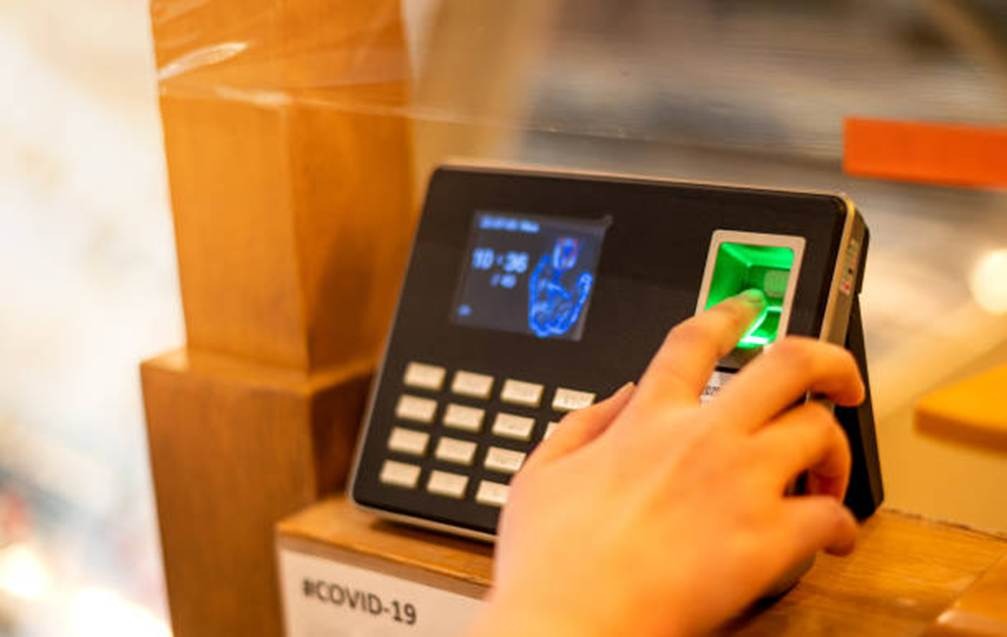
Maintaining manual attendance is highly cumbersome for administrators. Entering, verifying, and sending data of dozens of staff members to the payroll department every day is basically a very time-consuming process. The Automated Tracking healthcare attendance system has reduced this burden. Now, each employee marks their attendance through a swipe card, fingerprint, or facial recognition. The system saves the data directly in the HR software.
This eliminates the need for any kind of manual verification. The administrators could now concentrate on patient service and operations. The automated system provides accurate, error-free data, which is used in payroll and performance reports. The system sends notifications in case any staff member is absent or late. In this way, supervisors may view the real-time availability of the staff.
This process reduces administrative burden for hospitals and provides time savings. Earlier, administrators used to spend hours managing data. Now, everything is automated. This technology is a boon for the healthcare sector in that it simplifies the management, improving the overall efficiency of the system.
### **Increasing payroll accuracy**
The payroll calculation in hospitals is very sensitive. Payroll errors are common if attendance records are not accurate. An Automated Hospital employee management system solves this problem. When the staff mark their attendance, the system directly calculates the working hours. Overtime, holidays, and late arrivals are all recorded with the data.
This information gives the payroll department the most truthful data possible. Payroll calculations are more transparent, and disputes are mostly eliminated. Before, with manual entries in the previous system, some employees were overpaid or underpaid. Now the system has a record of every second. Automated reports with hour details also give a clear picture to management regarding every employee's working hours.
One major benefit of the process is that the payroll system becomes fair. When employees trust that their data will be recorded accurately, the level of trust in management will rise. The system is also a time saver for HR teams. They can easily prepare the monthly payroll without manual checks. It is an efficient and transparent solution for hospitals.
### **Real-time staff monitoring**
The biggest advantage for healthcare facilities in the Medical staff[ time clock](https://www.opentimeclock.com/) is that the managers get access to real-time monitoring. Supervisors can view at once which nurse or doctor is on shift and whose presence is missing. This feature is very helpful for hospitals to avoid delayed patient care. In case a staff member is running late, the system sends an automatic notification.
Real-time monitoring also enhances accountability. The staff are aware that their attendance and shift activities are monitored; this helps in maintaining discipline. Managers can deploy resources effectively and can respond swiftly to any change of shift. In this way, there is quick responsiveness in case of emergencies or any sudden workload surges.
Dashboards provide a comprehensive view in the form of visual reports regarding punctuality, overtime, and absenteeism records. It not only tracks staff performance but also keeps hospital operations smooth and organized. Real-time monitoring eliminates the need for manual follow-up by HR and administration. It streamlines the overall workflow of the hospital and enhances the quality of patient care.
### **Integration with payroll and HR systems**
The most positive feature of an automated attendance system is that it directly integrates with the payroll system in hospital employee management. Working hours, overtime, and leaves automatically get recorded when your staff mark their attendance in HR software. All manual entries would go away.
This integration has made payroll processing faster and error-free. There is no need for the HR team to spend hours verifying monthly attendance. Such integration ensures correct salary calculation with no possibility of discrepancies. It has automated alerts and dashboards that help HR in real-time anomaly detection. If the staff member has to update any overtime or absence records, the system reflects it right away.
Such integration has great benefits for the running of a hospital. Seamless connection with payroll and HR would help the management to easily gain insight from the staff reports, department-wise attendance, and overtime, thus overall streamlining the work and reducing the administrative cost to the hospital. Standardized integrations promote transparency and trust in managing staff.
### **Improving compliance and accountability**
Compliance and accountability are absolutely indispensable in the healthcare industry. It is important that the policies of labor law, overtime, and staff attendance are properly adhered to by hospitals. Automated Tracking healthcare attendance system ensures these regulations are applied correctly. Real-time attendance records are generated well in time for audits and inspections.
Accountability among staff also increases. Where every clock-in, clock-out, and break record is automatically captured, staff know that all activities are tracked. Buddy punching and fake entries become a thing of the past. Managers and HR teams have proof about who is working how many hours.
The operational risk for the hospital is reduced due to compliance and accountability. In case any dispute or error happens, clear proof is possible through system logs. This process not only ensures legal compliance for the hospital but also increases staff efficiency and discipline. Automated tracking reduces the stress caused by manual monitoring and follow-up, hence rendering the system completely transparent and efficient.
### **Increasing shift scheduling efficiency**
Automatic attendance administration for hospital personnel significantly enhances and facilitates work planning. Employees working in healthcare institutions often work in rotational shifts, night shifts, and on emergency calls. Manual planning may result in confusion, overlap, or understaffing, which affects patient service. Automated systems track the availability of staff with precision and provide real-time insights to assist the manager in assigning shifts.
With the system, a supervisor will know which doctors, nurses, or even support staff are available for a particular shift. In the event of any absence or lateness, the system acts immediately to alert management, who will distribute the work appropriately and call in extra staff when needed. This reduces disruptions in operations and maintains the quality of patient care. Analysis of historical attendance further optimizes future schedules and aids in staffing predictions due to peak times or special events.
Integration of time clock records from the medical staff with that of the scheduling software reduces human error. Notifications about shifts, swaps, or overtime are automated; thus, miscommunication does not occur. Remotely, staff can review their schedules, request shift changes, and track hours. In general, the automated attendance system gives transparency, credibility, and efficiency in scheduling, increasing productivity and delivery of quality healthcare.
### **Reducing administrative workload**
The biggest advantage of an Automatic Tracking healthcare attendance system is that it tremendously reduces administrative workload. Verification of attendance, computation of overtime, and updating of vacation balances involve many hours in any hospital's HR department. Automated systems eliminate these repetitive tasks and give HR time to focus on strategic activities.
Every single clock-in and clock-out is logged digitally, while remaining completely accurate. Automatic generation of payroll and compliance reports reduces the chances of human error. Personnel records are centralized, accessible, and updated in real time, with no paper or manual spreadsheet in sight. Along with saving a lot of time, this also increases data accuracy and consistency.
Administrators can resolve discrepancies, monitor trends, and review staff performance without constant follow-up. Absenteeism, tardiness, or overtime is reported back to the respective departments automatically. By reducing the administrative effort, hospitals can put their resources to better use and optimize operational efficiency while maintaining staff satisfaction. Automation ensures transparency and accountability between departments with seamless workflow, thereby enabling the management to focus on quality patient care.
### **Supporting remote and multi-location staff**
Health facilities often span many departments, buildings, or satellite clinics. It is cumbersome to track attendance manually in this kind of setting; hence, inaccurate records and payroll errors have become quite common. Automated Medical staff time clock systems solve this problem and support remote and multi-location tracking. Employees can log their hours using mobile apps, tablets, or biometric devices from different locations, and the system consolidates all the data into a central dashboard.
Managers have full insight into attendance and shift patterns across all locations. Real-time insights support supervisors in making better decisions, such as reallocating staff to high-patient-volume areas or the identification of improvement opportunities within underperforming units. Automated systems promote compliance with HIPAA and store sensitive employee data in secure, confidential storage.
With remote tracking enabled, health facilities are assured of the same level of consistency and reliability in monitoring employee attendance, no matter where staff may be working. This allows for better resource management, prevents unauthorized entries in employee attendance, and reduces operational inefficiencies. Staff working across multiple sites can log hours with ease and with no delays or confusion. Overall, hospitals find a scalable solution in automated attendance systems. Quality care standards are maintained, along with management and operations, for hospital employees across multi-site locations.
### **Increasing payroll accuracy**
Automatic Tracking healthcare attendance systems ensure payroll accuracy. Considering that staff work multiple shifts, overtime, and emergency hours in the hospital, their payroll calculations can be quite complex. For all these reasons, staff could not receive pay for an accurate number of hours worked because automated systems correctly record each clock-in and clock-out.
This includes auto-salary calculation, overtime, leave balance, and deductions by integrating attendance information with payroll software. In this way, hospitals can minimize errors caused by a manual system, reduce pay disputes, and promote timely disbursement of pay. Precise pay enhances the confidence and satisfaction of staff because they know that their pay correctly reflects the use of their time.
Detailed reports on attendance patterns, overtime trends, and leave usage also come from automated systems to managers. These, in turn, can help with refining staffing budgets, absenteeism patterns, and resource allocation planning. Reducing errors and streamlining payroll saves time and money for the hospital while building confidence among administrative staff. Automated payroll systems make employee management at the hospital transparent, consistent, and reliable, allowing facilities to focus on quality patient care, rather than administrative issues.
### **Increasing employee accountability**
Automatic systems in Medical staffing, a time clock, build accountability by tracking staff attendance and performance in real-time. Workers who know that every one of their clock-ins and clock-outs will be recorded accurately will stick to the schedule and keep their punctuality.
Managers can view detailed logs on the attendance, shift duration, and overtime of all their employees. This level of transparency dissuades absenteeism, unauthorized leave, and "buddy punching." Employees are allowed to access their own attendance record via secure dashboards, enabling self-monitoring and responsibility. Further, automated systems enable supervisors to spot patterns, like habitual tardiness or frequent absence, and take proactive measures to improve employee accountability and high performance.
Tracking healthcare attendance and digital reporting guarantees fair employee assessment and reward for actual hours given. Accountability helps in enforcing discipline within the workforce, operational efficiency, and satisfaction among staff in the hospitals for better delivery of services and high-quality healthcare outcomes.
### **Conclusions**
Automatic attendance systems for tracking healthcare attendance have totally changed how hospitals manage their staff, shifts, and payroll. This is because the manual timesheet has been replaced by real-time information about the attendance of workers, punctuality, and performance. This makes hospital employee management efficient, accurate, and transparent, hence reducing administrative burdens and payroll errors. These systems allow for complex shift scheduling, multiple location tracking, and interface with payroll programs that provide precise compensation for overtime, vacations, and more. Medical staff time clock data enhances accountability, eliminates attendance fraud, and encourages a disciplined workforce.
### **FAQs:**
#### **1. What is a healthcare attendance tracking system?**
A healthcare attendance tracking system automatically records hospital staff clock-in and clock-out times, improving accuracy and accountability.
#### **2. How does a medical staff time clock benefit hospitals?**
The medical staff time clock ensures precise tracking of nurses, doctors, and technicians, reducing payroll errors and enhancing shift scheduling.
#### **3. Can automated systems handle multiple hospital locations?**
Yes, automated systems support multi-location staff tracking, allowing real-time monitoring across departments and satellite clinics efficiently.
#### **4. How do automated attendance systems improve payroll accuracy?**
They integrate attendance data with payroll software, calculating salaries, overtime, and leave automatically, minimizing errors and disputes.
#### **5. Do these systems help with compliance and audits?**
Yes, automated hospital employee management ensures compliance with labor laws, stores historical data, and provides audit-ready reports.
---
# Agent Instructions
This documentation is published with GitBook. GitBook is the documentation platform designed so that both humans and AI agents can read, navigate, and reason over technical content effectively. Learn more at gitbook.com.
## Querying This Documentation
If you need additional information that is not directly available in this page, you can query the documentation by asking a question.
Perform an HTTP GET request on the following URL with the `ask` and `goal` query parameters:
```
GET https://www.opentimeclock.com/docs/blog1/november-2025/how-healthcare-facilities-benefit-from-automated-attendance-systems.md?ask=&goal=
```
`ask` is the immediate question: it should be specific, self-contained, and written in natural language.
`goal` is what the user is ultimately trying to achieve, the reason they need the answer. Sharing it helps GitBook give you a better, more relevant answer. A goal is most helpful when it describes the outcome the user wants rather than restating the question. For example, with `ask=how do I create an API token`, a goal like `automate deployments from our CI pipeline` lets GitBook tailor the answer to that use case.
The response will contain a direct answer to the question and relevant excerpts and sources from the documentation.
Use this mechanism when the answer is not explicitly present in the current page, you need clarification or additional context, or you want to retrieve related documentation sections.