> For the complete documentation index, see [llms.txt](https://www.opentimeclock.com/docs/llms.txt). Markdown versions of documentation pages are available by appending `.md` to page URLs; this page is available as [Markdown](https://www.opentimeclock.com/docs/blog1/december-2025/how-to-implement-ada-accommodations-in-attendance-workflows.md).
# How to implement ADA accommodations in attendance workflows
How to implement ADA accommodations in attendance workflows to ensure compliance, improve accessibility, reduce legal risk, and create an inclusive workplace for all employees.
Is the presence of the attendance program in your organization workable to every single one of your employees, or does it merely apply to the majority? It was established that one-third of the entire workforces in the US are working in a capacity with a disability, yet the traditional approach in the working attendance program remains in place for many organizations.
Many workers with disabilities are put in a difficult spot due to the presence of a traditional attendance program in an organization since the program applies a strict timing mechanism and automatically penalizes the work of the employee without considering the factors of the disability they have and other difficult conditions they experience every day that they cannot control in order to meet their work requirements. The threat to the ADA compliance level of an organization that applies the traditional attendance program to employees can be a significant risk to the organization.
### Understand the principles of ADA and attendance compliance
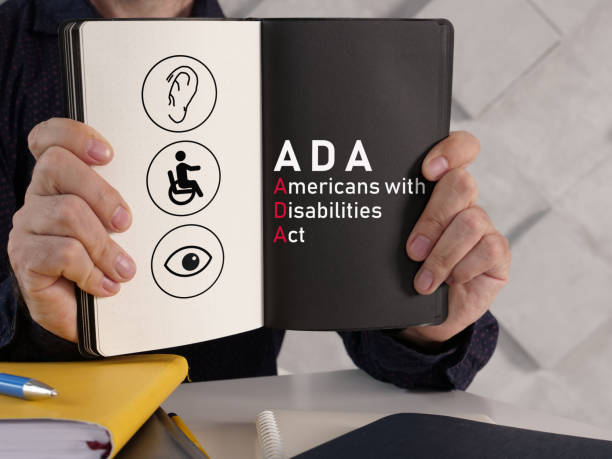
ADA, or Americans with Disabilities Act, refers to an act that ensures an equal opportunity for the disabled in the workplace. On this matter, it is important to note that employers have the mandate of implementing reasonable accommodations that help the employee in their job. Requirements for attending the workplace are not only focused on implementing the aspect of punctuality, but the main mandate involves ensuring that the process of attending the workplace does not discriminate against the employee.
There exist some disabled employees that may lack the ability to follow the required[ timing](https://www.opentimeclock.com/), but that does not mean that the individual lacks the ability to perform the task. Therefore, a policy that fails to be flexible breaches the ADA. Putting the basics into perspective, organizations will always make the right decisions.
### ADA Issues Reporting in the Attendance Workflow
ADA issues in the attendance workflow tend to be masked, such that they emerge when an ADA complaint is filed. Typically, the main problem is when there is fixed attendance time, and this is unrealistic for some medical conditions. Some employees take longer to perform morning routines as a result of their medical procedures, while others have conditions such as chronic fatigue syndrome.
Biometric-based attendance systems also pose a problem, especially for workers with medical conditions that restrict them from operating devices. Absence penalty automation is also a significant issue, as the system lacks context. Moreover, the attendance points system also poses a challenge, especially when medical absences are combined with normal absences.
### Reasonable accommodation must be made when there is context
Reasonable accommodation does not entail a scenario where the organization will ignore its needs. Reasonable accommodation involves making an adjustment to offer an equal opportunity to work without straining the organization. Some reasonable accommodations for the process of attending an organization could include flexible timing, frequent breaks, as well as flexible clock-in. At times, adjusting the limit of attendance could also be considered. A major point is that this process of making an accommodation is not made at an individual level but through a joint process where both parties will be able to share their limitations. A major point is that productivity will not be affected but rather employee engagement will be boosted.
### How to Make School Attendance Policies ADA-Friendly
ADA-related attendance process implementation requires a flow effective under the ADA and a supportive, company-wide, written attendance policy. The written attendance policy must be written clearly and simply, making it easy to understand, and employees should be able to comprehend their responsibilities and rights with ease. The attendance policy is also required to specify whether accommodation under ADA is possible and the process of applying for the accommodation.
The attendance process should incorporate carefully formulated automatic disciplinary and termination procedures, excluding fair treatment of employees on the grounds of medicinal leaves. Regular reviews of the attendance policies are also important, and this is due to constant change in the employment needs of a company and the cited interpretations of the law.
### Digital attendance systems and access requirements
In [current times](https://www.opentimeclock.com/), organizations are adopting electronic attendance management systems at a growing pace, and this has increased the importance of accessibility as a key factor. According to the Americans with Disabilities Act, an electronic attendance management system must be usable by people with all types of abilities. Fonts and designs that are legible and an easy-to-use system are of great importance.
Compatibility with a screen reader and alternative methods of logging in are also important for accessibility. Biometric systems may not be convenient for some workers; hence, alternative systems must also be considered. Accessibility features must be compared while selecting an appropriate vendor.
### Role of Flexible Scheduling in Ada Compliance
Flexible scheduling is a very powerful method of ADA accommodation. It implies that employees are given the freedom to adjust their schedules to some degree without affecting performance. Flexible start times, staggered shifts, and compressed work weeks are very helpful for most medical conditions. Telecommuting and flexible scheduling are now a part of flexibility.
The primary intent of flexible scheduling is to assist employees to manage their health even when they are required to perform their work responsibilities. Employers are supposed to use flexibility with some guidelines. When guidelines are set, flexibility is not exploited but enhances both productivity and loyalty.
### Medical documentation and confidentiality processes
Medical documentation is both sensitive and critical as far as the ADA accommodation process is concerned. In the attendance workflow, documentation is carried out for the basis of the accommodation request verification, and this does not undermine the employee’s privacy. Employers must realize that medical information is only adequately utilized in its relevant scope. HR must adopt a streamlined process that involves storing all documentation in safe systems and limiting access only to authorized individuals. Supervisors are also under no compulsion to acquaint employees in depth regarding the medical issues.
They are simply informed about which accommodation has been granted. A critical element in adherence to the ADA is maintaining strong elements of confidentiality. Employees feel reluctant to make accommodation requests, fearing that the misuse of the information is imminent. A well-implented method regarding documentation in the attendance workflow enables confidence and avoids the scope for potential litigation. Documentation is also crucial for legal and subsequent auditors. Thus, documentation must cease to remain as an obstacle and instead function as an advantage.
### Importance of Training and Awareness of Managers
The key individuals involved in implementing an attendance process based on ADA guidelines are the managers. Even with ideal policies, there cannot be efficient implementation without awareness of AD concepts on the part of the manager. The training for managers should cover how they interact with employees regarding attendance and how they understand a situation prior to it becoming a disciplinary problem. The importance of training for managers and employees would also lie in making them aware of what an interactive process is and how to treat an employee with respect while dealing with attendance issues at work. The attitude of regard for attendance issues as a favor, rather than a right, would be removed through training and awareness. When made aware, managers decide on a timely basis, and conflicts would not escalate at work or at home either. Good managers at work introduce a positive attitude towards an environment at their workplace, where employees feel secure at work.
In short, awareness on the part of the manager, awareness of an employee, and awareness on the part of an employee regarding how organizations deal with attendance would help an organization achieve compliance with ADA requirements, simply because it would be just a paperwork process with no regard for long-term implications otherwise at an organizational level.
### Compare performance and attendance separately
As per ADA guidelines, one of the essentials of attendance workflow management is that assessment and attendance must remain separate. Many companies fall into the trap of associating any kind of attendance issue with performance. If an individual is allowed flexible work hours due to ADA compliance reasons, his/her work output must qualify assessment criteria and not attendance patterns. Benchmarks of performance assessment must qualify on the grounds of results and quality. Attendance must qualify as a reporting tool but cannot ever qualify as a decisive tool.
Discrimination and misinterpretation get eliminated when the assessment and attendance criteria are treated separately. Employee confidence while performing duties gets enhanced too. There comes clarity for managers regarding how each aspect must qualify. The philosophy of ADA is that disability must qualify on the grounds of difference and never on the grounds of limitation. Stronger organizations get developed through equal evaluation practices.
### Attendance adjustment monitoring and review
ADA alterations are not a singular process but a continuous procedure. The monitoring of attendance adjustments should be done on a constant basis to check their effectiveness. There may be some attendance adjustments that would need to be modified in accordance with a change in a worker’s position or their status in a given period of time.
The aim of monitoring attendance alterations should not be restricted to rating the affected employee but should attune to checking whether the proposed attendance alteration is feasible and equitable at that given time. There may be some attendance adjustments that, in a given scenario, result in some unseen effects related to productivity, which can be modified or revised together at that time, while documentation can be updated as part of this process.
### Legal Risk Management and Documentation Strategy
Another important point about ADA compliance is risk management. Documentation of these attendance workflows is important because it guards against any complication that may arise from a lawsuit. There is a need to document all requests and responses regarding accommodation. This will verify that these organizations used an interactive process in a genuine and honest way. Documenting changes to attendance within a proper framework defines a clear process.
Inconsistencies are important issues that contribute to risk management because an arbitrary process is a point of risk. There is a high need for collaboration and coordination between human resources and a lawyer. There is also a need for regular audits as part of risk management. Employee trust builds as soon as an organization sets its attendance process according to the laws that govern labor issues.
### ADA Success Through Inclusive Culture
The end objective of ADA accommodations is more than merely legal compliance – it is the creation of a culture of inclusion. A flexible and fair attendance workflow means that employees are valued. A culture of inclusion embraces differences and works with them. Such a culture is influenced by the behavior and communication patterns of leaders.
When leaders demonstrate support through open channels, there is a payback from employees. Attendance flexibility becomes a valued attribute and not a liability. Employees feel free to share their needs within a culture of inclusion. Such a culture is fundamental for sustainable growth.
### Conclusions
ADA accommodation implementation in an attendance workflow is an intelligent and ethical step. ADA accommodation implementation in an attendance workflow is not just about staying on the right side of the law; it also represents fairness and dignity. When companies focus on having an inclusive attendance workflow, they, in fact, not only avoid legal pitfalls, but they also have the strength to make their employees very loyal to their companies.
Bring balance to the table through flexible policies, training, and system implementation to make this approach work. An ADA-compliant attendance workflow is always ready to shape the future, and this makes it an attractive proposition to bring in new, qualified talent to the company.
### FAQs:
#### 1. What are ADA accommodations in attendance workflows?
ADA accommodations in attendance workflows are reasonable adjustments to attendance rules or systems that help employees with disabilities meet job requirements without discrimination.
#### 2. Why is ADA compliance important for attendance policies?
ADA compliance is important because strict attendance policies can unintentionally discriminate against employees with disabilities and expose organizations to legal and ethical risks.
#### 3. What are common examples of attendance accommodations under ADA?
Common accommodations include flexible start times, modified break schedules, remote clock-in options, and adjustments to attendance point systems for medical reasons.
#### 4. How should employers handle medical documentation for attendance accommodations?
Employers should collect only necessary medical information, keep it confidential, limit access to authorized staff, and use it solely to support accommodation decisions.
#### 5. How do ADA-compliant attendance workflows benefit organizations?
ADA-compliant attendance workflows improve employee trust, increase engagement, reduce turnover, and help organizations avoid legal disputes while supporting a diverse workforce.
---
# Agent Instructions
This documentation is published with GitBook. GitBook is the documentation platform designed so that both humans and AI agents can read, navigate, and reason over technical content effectively. Learn more at gitbook.com.
## Querying This Documentation
If you need additional information that is not directly available in this page, you can query the documentation by asking a question.
Perform an HTTP GET request on the following URL with the `ask` and `goal` query parameters:
```
GET https://www.opentimeclock.com/docs/blog1/december-2025/how-to-implement-ada-accommodations-in-attendance-workflows.md?ask=&goal=
```
`ask` is the immediate question: it should be specific, self-contained, and written in natural language.
`goal` is what the user is ultimately trying to achieve, the reason they need the answer. Sharing it helps GitBook give you a better, more relevant answer. A goal is most helpful when it describes the outcome the user wants rather than restating the question. For example, with `ask=how do I create an API token`, a goal like `automate deployments from our CI pipeline` lets GitBook tailor the answer to that use case.
The response will contain a direct answer to the question and relevant excerpts and sources from the documentation.
Use this mechanism when the answer is not explicitly present in the current page, you need clarification or additional context, or you want to retrieve related documentation sections.