> For the complete documentation index, see [llms.txt](https://www.opentimeclock.com/docs/llms.txt). Markdown versions of documentation pages are available by appending `.md` to page URLs; this page is available as [Markdown](https://www.opentimeclock.com/docs/settings.md).
# Settings
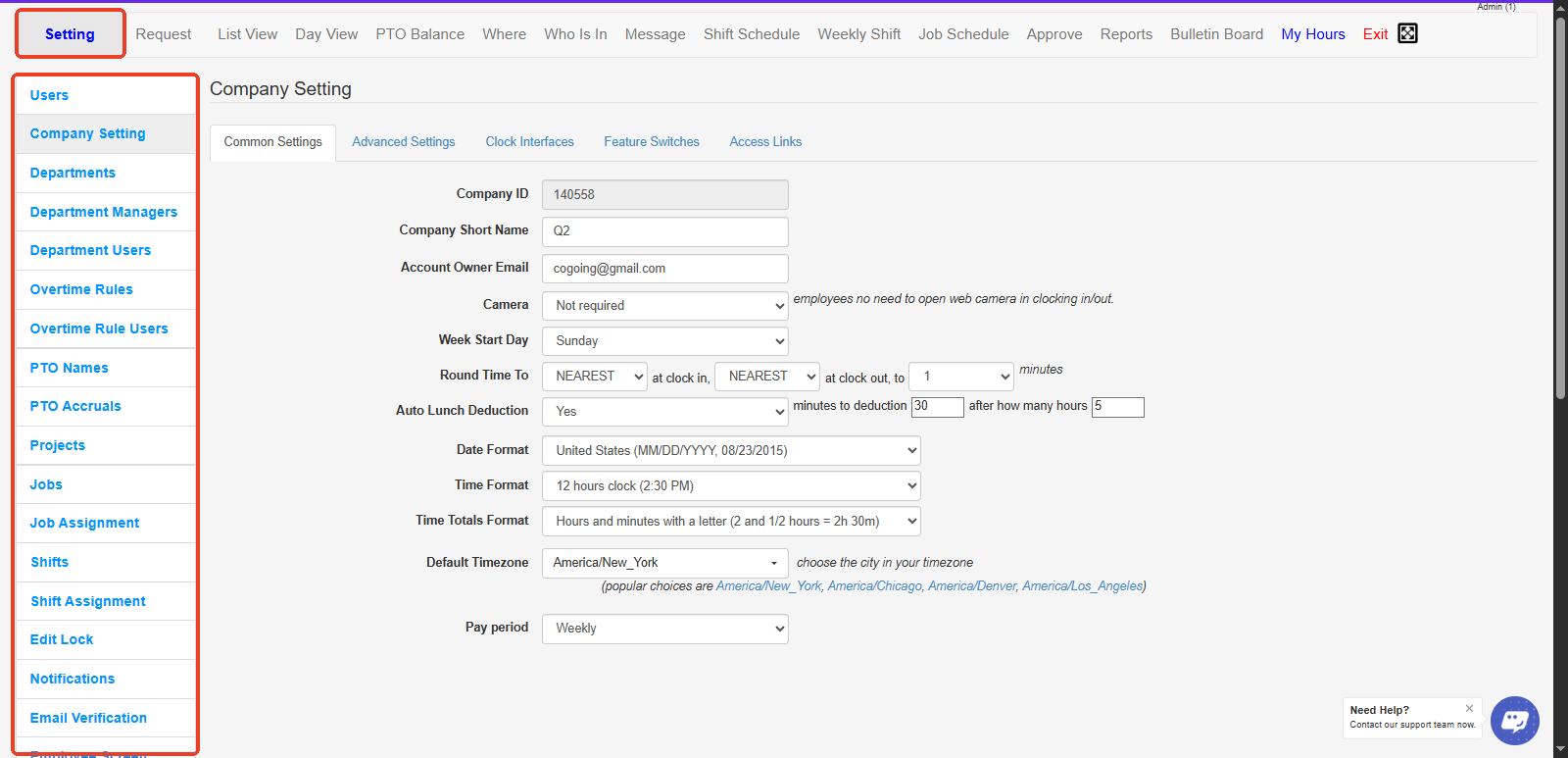
The **Settings Tab** in OpenTimeClock allows administrators to configure and customize various options for a seamless experience. This tab includes:
* **General Settings**: Adjust basic application settings, including time zone, company logo, and language preferences.
* **User Management**: Manage user access, assign roles, and set permissions.
* **Shift Configuration**: Set up work shifts, overtime rules, and break policies for employees.
* **Notifications**: Enable or disable notifications for different events and set notification preferences.
* **Integration Options**: Connect OpenTimeClock with other platforms for enhanced functionality.
These settings ensure that the clock system aligns with your organization's specific requirements and operational needs.
Feel free to contact us at our toll-free number: +1-833-702-2927 or email us at support@opentimeclock.com.
---
# Agent Instructions
This documentation is published with GitBook. GitBook is the documentation platform designed so that both humans and AI agents can read, navigate, and reason over technical content effectively. Learn more at gitbook.com.
## Querying This Documentation
If you need additional information that is not directly available in this page, you can query the documentation dynamically by asking a question.
Perform an HTTP GET request on the current page URL with the `ask` query parameter, and the optional `goal` query parameter:
```
GET https://www.opentimeclock.com/docs/settings.md?ask=&goal=
```
`ask` is the immediate question: it should be specific, self-contained, and written in natural language.
`goal` is optional and describes the broader end goal you are ultimately trying to accomplish on behalf of the user. GitBook uses it to tailor the answer towards what is most useful for that goal.
The response will contain a direct answer to the question and relevant excerpts and sources from the documentation.
Use this mechanism when the answer is not explicitly present in the current page, you need clarification or additional context, or you want to retrieve related documentation sections.