Time Clock Software for Home Health: Simplify Scheduling, Time Tracking, and Payroll
Discover the best time clock software for home health agencies. Simplify scheduling, GPS tracking, and payroll compliance for free with OpenTimeClock today.
Home health care is one of the most operationally complex service industries that exists. Care workers are dispatched to different client homes every day. Each visit has a scheduled start and end time that must be documented for both billing and regulatory compliance. Caregivers may cover multiple clients in a single shift, work irregular hours across different days, and operate with minimal direct supervision throughout their working day.
Managing all of this through paper timesheets, phone-based check-ins, or disconnected scheduling systems creates serious problems. Care visits go undocumented. Payroll calculations are based on estimates rather than verified times. Billing disputes arise because there is no objective record of exactly when a caregiver arrived and left a client's home. And regulatory inspections that require documented evidence of visit timing and duration find records that are incomplete or unreliable.
Time clock software for home health agencies solves these problems by providing a digital, GPS-verified system for recording care visits, managing caregiver schedules, tracking hours against payroll, and generating the documentation that billing and compliance require. In this article we will explain what home health agencies specifically need from a time tracking platform, how different features address different challenges, and how OpenTimeClock delivers all of this completely free.

The Unique Challenges of Home Health Time Tracking
Home health care presents time tracking challenges that most industries simply do not face. Understanding them clearly helps agency managers evaluate software solutions more effectively.
Distributed workforce with no central location. Every other shift-based business has employees coming to a single workplace where a kiosk or physical time clock can capture attendance. Home health caregivers go directly to client homes. There is no central clock-in point. The time tracking system must work from wherever the caregiver is, using the device they carry.
Regulatory and billing documentation requirements. Home health agencies are typically reimbursed by Medicare, Medicaid, or private insurers based on documented visits. Each payer has specific requirements about what documentation must support a billing claim. The time of arrival and departure at the client's home, the services provided, and who provided them must be recorded accurately. Inadequate documentation leads to claim denials and can trigger fraud investigations.
Electronic Visit Verification mandates. The 21st Century Cures Act requires that states implement Electronic Visit Verification, known as EVV, for Medicaid-funded home health and personal care services. EVV requires electronic documentation of the type of service, the individual receiving the service, the individual providing the service, the date of service, the location of service delivery, and the start and end time of service. A digital time clock software for home health that captures GPS location and timestamps at each visit provides the core data that EVV compliance requires.
Multiple clients per caregiver per day. A home health aide may visit four or five clients in a single day, spending different amounts of time at each location. The time tracking system must support multiple clock-in events throughout the day, each linked to a specific client or case, with GPS verification at each location.
High turnover and varied employment arrangements. Home health agencies often have significant staff turnover and may employ a mix of full-time employees, part-time workers, and independent contractors. The time tracking system needs to accommodate all of these arrangements and make onboarding new staff as quick and simple as possible.
GPS Verification: The Foundation of Home Health Time Tracking
For home health care specifically, GPS verification is not an optional feature. It is the core capability that distinguishes a system adequate for this industry from one that is not.
When a caregiver clocks in at a client's home using OpenTimeClock, the system records their GPS coordinates at the exact moment of the clock-in. This creates a verified, timestamped record that the caregiver was at the client's location at the recorded time. The same verification happens at clock-out.
This GPS record serves multiple purposes simultaneously. For billing, it provides objective documentation that the visit occurred at the claimed location and at the claimed time. For compliance, it supports the EVV data requirements for Medicaid-funded services. For payroll, it provides verified start and end times for each visit that replace the estimated or self-reported times that are typical in paper-based systems. And for dispute resolution, it provides objective evidence that can resolve any disagreement between the agency, the caregiver, and the client about when visits took place.
The GPS clock-in through OpenTimeClock requires no dedicated hardware. Caregivers use the OpenTimeClock mobile app on their own smartphone. The app is available for both iOS and Android. Clock-in takes seconds and requires no technical knowledge beyond basic smartphone operation.
Scheduling Home Health Visits in One System
Effective time clock software for home health does more than record time. It connects time recording to scheduling so that every caregiver knows their visit schedule in advance and every manager can see at any moment whether visits are happening as planned.
OpenTimeClock's shift scheduling feature allows agency managers to build caregiver schedules that specify which caregiver is visiting which client, at what time, on which day. Each scheduled visit is visible to the caregiver through their mobile app so they always have their current schedule available without calling the office.
When a caregiver clocks in for a visit, the system automatically compares the actual clock-in time and GPS location against the scheduled visit. If the caregiver arrives significantly late, clocks in from the wrong location, or does not clock in at all for a scheduled visit, the system generates an alert to the manager. This real-time alert system is particularly important in home health care where a missed visit may mean a vulnerable client is not receiving needed care.
The scheduling system also helps managers with the complex logistics of assigning caregivers to clients across a geographic area. When caregiver schedules and client locations are both managed within the same platform, scheduling decisions can account for travel time between visits and minimize the travel burden on caregivers while maximizing the number of clients served.
Photo Verification and Identity Confirmation
In addition to GPS location, OpenTimeClock captures a photo at every clock-in event. The photo is timestamped and stored alongside the GPS data and the attendance record.
For home health agencies, this photo verification serves as confirmation that the correct caregiver was at the client's location. In environments where face-to-face supervision is not possible and where the same client may receive visits from multiple caregivers, having a photo record of who was present during each visit adds an important layer of accountability.
The photo also supports compliance with identity verification requirements that some payers and regulatory bodies impose. When an audit requires documentation of who provided a specific service on a specific date, the photo record provides that verification alongside the GPS and timestamp data.
Managing Caregiver Hours and Payroll
Home health payroll has specific characteristics that differ from most other industries. Caregivers are often paid for direct care hours only, not for travel time between clients. Different visits may qualify for different pay rates depending on the type of care provided or the funding source. And overtime rules apply based on total weekly hours, which for caregivers who work irregular schedules can be difficult to track without a systematic approach.
OpenTimeClock calculates total hours automatically from the verified clock-in and clock-out records for each visit. The system applies configured overtime rules to total weekly hours and generates payroll exports that include all the data the payroll team needs to process caregiver compensation accurately.
For agencies that pay different rates for different types of visits, the project and job tracking features allow each visit to be categorized by visit type, with the appropriate rate information attached. This categorization flows into the payroll export, supporting the application of the correct rate to each visit type without manual calculation.
The accuracy of GPS-verified time records also protects the agency against payroll disputes. When a caregiver disputes their hours, the system provides objective evidence of exactly when each visit started and ended, reducing the number of disputes that require investigation and resolution.
Leave and Availability Management for Caregivers
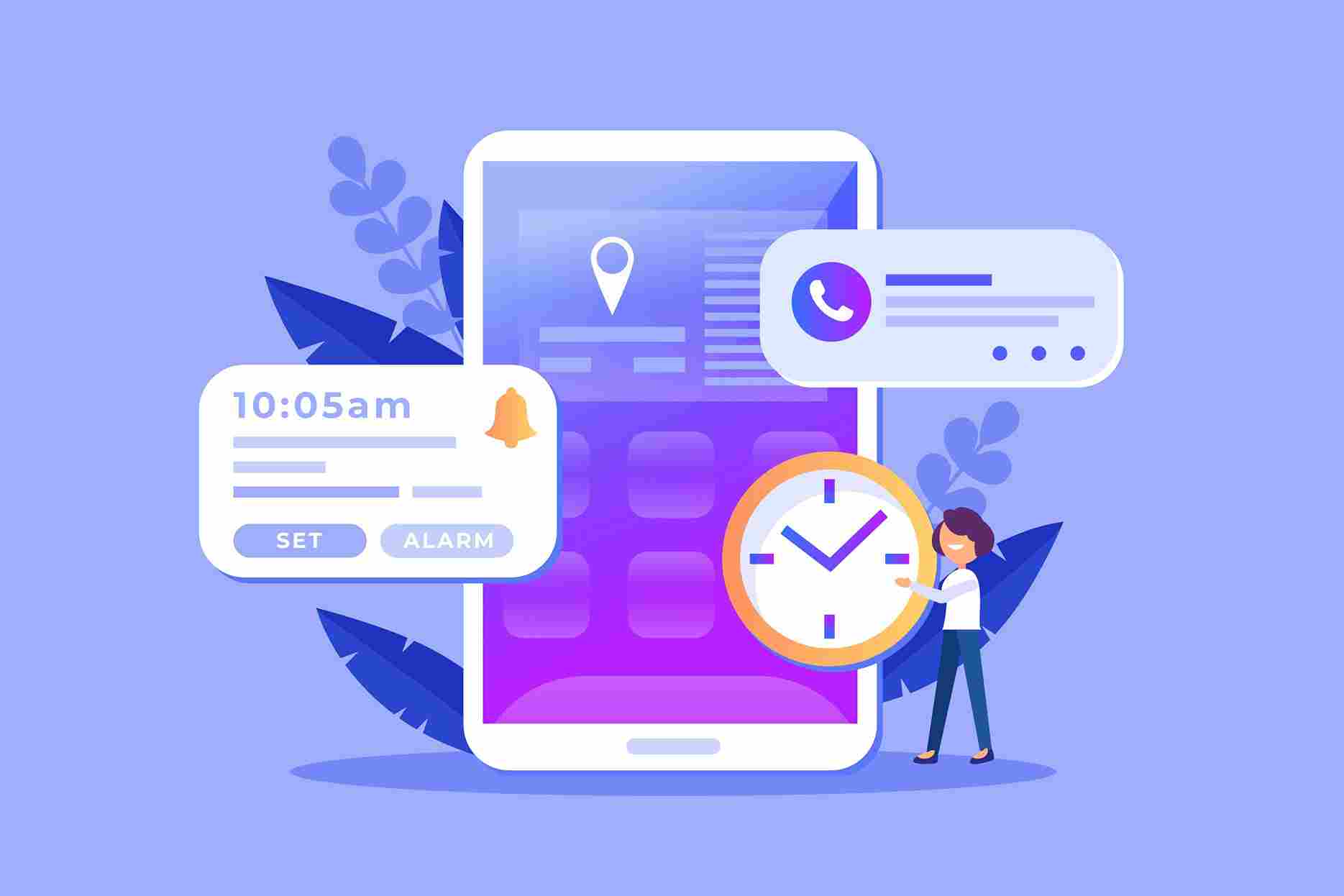
Caregiver availability is one of the most important inputs into home health scheduling. When a caregiver is unavailable due to illness, planned leave, or a change in their availability, the agency needs to know immediately so that client visits can be reassigned.
OpenTimeClock allows caregivers to submit leave requests and availability updates through their personal portal on their smartphone. Managers receive instant notifications when availability changes are submitted and can approve or decline requests with a single action. Approved absences are reflected in the scheduling system so that the manager building the next week's schedule has current availability information for every caregiver.
PTO balances are tracked automatically based on the accrual rules configured for each caregiver. This means caregivers can see their available leave balance at any time without contacting the office, and managers always know how much leave each caregiver has available when planning coverage.
EVV Compliance and Medicaid Documentation
The Electronic Visit Verification requirement is a significant compliance obligation for home health agencies receiving Medicaid funding. EVV requires electronic documentation of six specific data elements for each visit: the type of service, the individual receiving the service, the caregiver, the date, the location, and the start and end times.
Time clock software for home health that captures GPS-verified clock-in and clock-out times, links each visit to a specific client and caregiver profile, and records the service type through the job or project categorization provides the core data elements that EVV systems require.
OpenTimeClock captures GPS coordinates, caregiver identity through the authenticated mobile clock-in, timestamps for start and end of visit, and service categorization through project selection. This data, combined with the client and caregiver information stored in the system, covers the EVV data requirements and can be exported in formats that state EVV system aggregators can process.
Agencies should verify the specific technical requirements of their state's EVV system, as implementation details vary. But the core time and location data that every EVV system requires is captured by OpenTimeClock as a standard feature of the mobile clock-in.
Why OpenTimeClock Is the Right Free Time Clock Software for Home Health
OpenTimeClock is a comprehensive, free workforce management platform that addresses the specific needs of home health agencies. It provides GPS-verified mobile clock-in through iOS and Android apps, photo capture at every visit for identity verification, project-level time tracking for client and service categorization, real-time scheduling with automated alerts for missed visits, leave management for caregiver availability, automatic overtime calculation, and payroll exports that include all the data needed for accurate caregiver compensation.
The platform works entirely through smartphones that caregivers already carry, requiring no dedicated hardware and no upfront investment in equipment. Setup is straightforward and can be completed by an agency manager without IT expertise. And the entire platform is completely free with no credit card required.
For home health agencies operating on tight margins and facing increasing regulatory requirements, a professional time clock software for home health solution that costs nothing is not just convenient. It is a meaningful operational advantage.
Sign up for free at OpenTimeClock and simplify how your agency manages visits, caregivers, and payroll starting today.
Conclusion
Time clock software for home health agencies is not a generic time tracking product applied to a specialized industry. It is a solution to the specific problems that home health care creates: distributed caregivers, GPS verification requirements, EVV compliance mandates, visit-level documentation for billing, and complex payroll calculations based on verified times across multiple daily visits.
OpenTimeClock addresses all of these needs through a single free platform that caregivers can use from their smartphones and managers can oversee from any device. The combination of GPS verification, photo capture, real-time scheduling, and automated payroll exports makes it the most practical and cost-effective solution available for home health agencies in 2026.
FAQ’s
Q1. What does time clock software for home health agencies need to do differently from standard time tracking?
Time clock software for home health must support mobile GPS clock-in at client locations rather than a central workplace, capture GPS coordinates and photos at each visit for billing and compliance documentation, link each visit to a specific client and service type, support multiple clock-in events per day across different locations, and generate the EVV data required for Medicaid compliance.
Q2. How does OpenTimeClock support Electronic Visit Verification requirements?
OpenTimeClock captures the core EVV data elements at every visit: caregiver identity through authenticated mobile clock-in, GPS location at start and end of visit, timestamps for start and end of service, and service type through project categorization. This data can be exported in formats compatible with state EVV aggregation systems.
Q3. Can caregivers use their own smartphones for GPS clock-in?
Yes. OpenTimeClock works through iOS and Android apps on any modern smartphone. Caregivers download the app, log in with their credentials, and clock in using GPS at each client visit. No agency-provided hardware is required. This makes the system immediately deployable across a caregiver workforce without equipment procurement.
Q4. How does the scheduling feature help manage missed or late home health visits?
OpenTimeClock's scheduling feature creates a planned visit record for each scheduled client visit. When the caregiver does not clock in within a configured window of the scheduled visit start time, the system sends an automated alert to the manager. This real-time alert allows the manager to contact the caregiver or arrange alternative coverage before a vulnerable client is left without their scheduled care.
Q5. Is OpenTimeClock genuinely free for home health agencies?
Yes. OpenTimeClock is completely free with no credit card required. The free plan includes GPS mobile clock-in with photo capture, client and service categorization through project tracking, real-time scheduling with automated miss alerts, caregiver leave management, automatic overtime calculation, and payroll exports.