Findmyshift vs Sling: Which Employee Scheduling Software Fits Your Business?
Compare Findmyshift vs Sling for employee scheduling and time tracking. See features, costs, and why OpenTimeClock is the best free alternative for your business.
When small and medium businesses look for employee scheduling software, Findmyshift vs Sling is one of the most common comparisons they make. Both platforms have built their reputation around making shift scheduling easier for businesses with hourly workers. Both offer mobile apps, team communication tools, and basic time tracking alongside their core scheduling function. And both are priced as subscription services that add up over time.
But beyond the surface similarities, Findmyshift vs Sling reveals meaningful differences in how each platform approaches scheduling, what features are included at different price points, which types of businesses each serves best, and where each falls short on time tracking accuracy.
This article gives you a complete, honest comparison of Findmyshift vs Sling, examines their strengths and limitations, and introduces OpenTimeClock as the free alternative that outperforms both platforms on time tracking verification while delivering adequate scheduling functionality at zero cost.
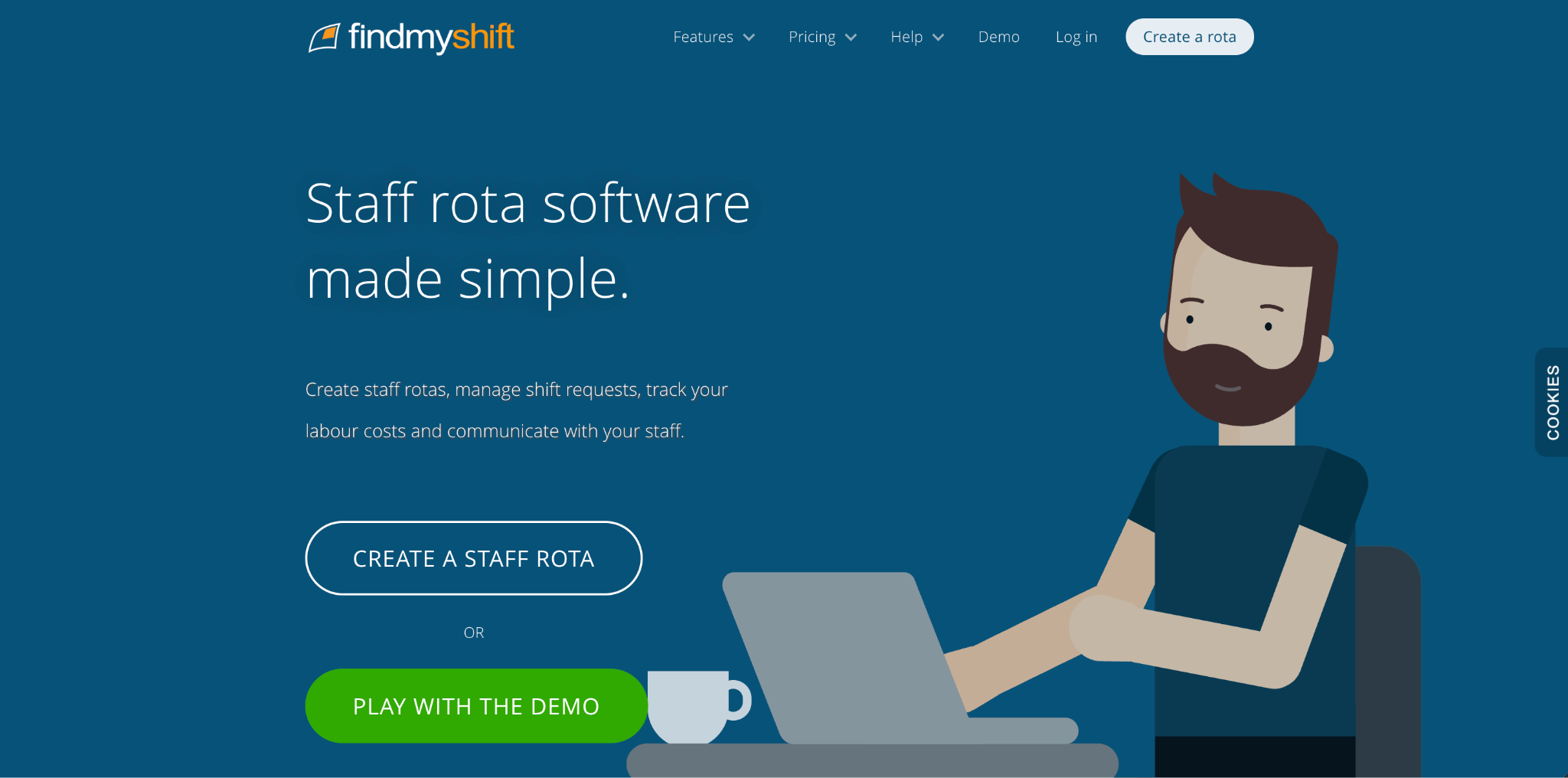
What Findmyshift Is and What It Offers
Findmyshift is a UK-based employee scheduling platform that has been available since the early 2000s. It is one of the older scheduling tools on the market and has built a following primarily in the UK, Ireland, and Australia, though it is used globally. The platform focuses on making weekly roster building fast and accessible for businesses with shift-based workforces.
The core scheduling interface is web-based with a spreadsheet-like layout that many managers find familiar and easy to learn. Employees can view their schedules, submit availability, request time off, and communicate with managers through the platform and mobile app.
Findmyshift includes basic time and attendance tracking. Employees can clock in and out through the web interface or mobile app. The platform tracks hours against the schedule and calculates pay based on configured pay rates. Timesheets can be exported for payroll processing.
Findmyshift offers a free plan for teams of up to five employees with limited features. Paid plans start at around forty to fifty dollars per month for a team plan and go up based on the number of employees managed.
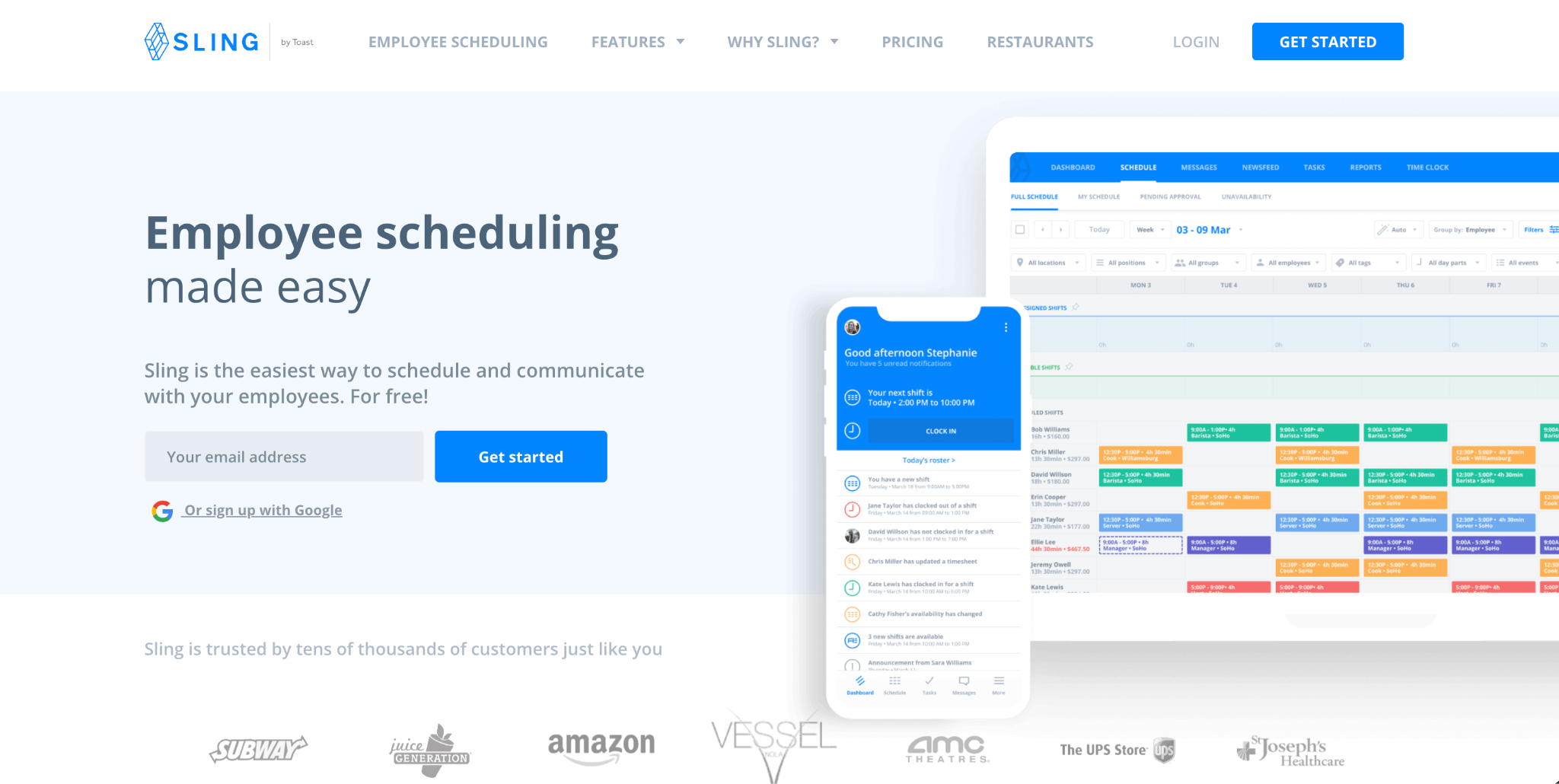
What Sling Is and What It Offers
Sling is a US-based workforce management platform that has expanded significantly since its launch. It started as a scheduling tool and has grown to include time tracking, team messaging, task management, and labor cost analysis. It is used across a range of industries including restaurants, retail, healthcare, and hospitality.
Sling's scheduling interface is modern and visually polished. The drag-and-drop schedule builder is intuitive, and the platform includes features like color coding by role, employee availability tracking, and shift swap management. The team messaging features are well-developed and allow managers to communicate with individual employees or groups within the platform.
Sling has a free plan that provides basic scheduling for unlimited employees but does not include time tracking. Time tracking is available only on paid plans. The Rocket plan starts at around two dollars per user per month and the Business plan at around four dollars per user per month. For a team of twenty-five employees, the Business plan costs one hundred dollars per month.
Limitations. Sling's free plan excluding time tracking is a significant limitation because most businesses need both scheduling and time tracking. The paid plans add time tracking but at a per-user cost that grows with the team. And Sling's time tracking, while functional with GPS and photo features on paid tiers, is less verification-focused than dedicated time clock platforms.
Head-to-Head: Findmyshift vs Sling Feature Comparison
When comparing Findmyshift vs Sling directly on the features that matter most for scheduling and time tracking, here is how they compare.
Scheduling interface. Sling leads on scheduling interface quality. Its drag-and-drop builder is more modern and visually polished than Findmyshift's spreadsheet-style layout. For managers who build complex schedules frequently, Sling's interface is generally easier and faster to use. Findmyshift's interface works but feels dated by comparison.
Time tracking. Both platforms include time tracking on paid plans. Sling's time tracking on the Business plan includes GPS and photo capture. Findmyshift's time tracking is more basic. Neither platform provides the depth of biometric verification that dedicated time clock platforms offer.
Team communication. Sling leads in team communication features. The messaging system is more developed and allows both individual and group messaging within the same platform as scheduling. Findmyshift includes basic communication features but they are less comprehensive.
Free plan value. Findmyshift's free plan is limited to five employees, which is too small for most businesses. Sling's free plan covers unlimited employees but excludes time tracking. Neither free plan provides what most businesses actually need without upgrading to a paid tier.
Global availability. Findmyshift has stronger adoption outside the United States, particularly in the UK and Australia, and may be better suited for businesses in those markets. Sling is more US-focused in its feature development and integrations.
Pricing predictability. Findmyshift's team plan pricing by the month rather than per-user is more predictable for growing teams. Sling's per-user model means costs scale directly as the team grows.
Where Both Platforms Fall Short on Time Tracking
The Findmyshift vs Sling comparison highlights a gap that both platforms share: neither provides the level of biometric time tracking verification that prevents buddy punching and creates defensible attendance records without additional hardware investment.
Findmyshift's basic time tracking has no biometric verification. Employees can clock in through the web interface or app without any identity confirmation beyond their login credentials.
Sling's Business plan includes GPS location and photo capture, which is better, but facial recognition using the device camera, which is the most reliable biometric verification available without dedicated hardware, is not a standard Sling feature.
For businesses where time fraud is a real concern, where attendance records need to withstand audit scrutiny, or where the employer wants verified rather than honor-based attendance records, both platforms have meaningful limitations in this area.
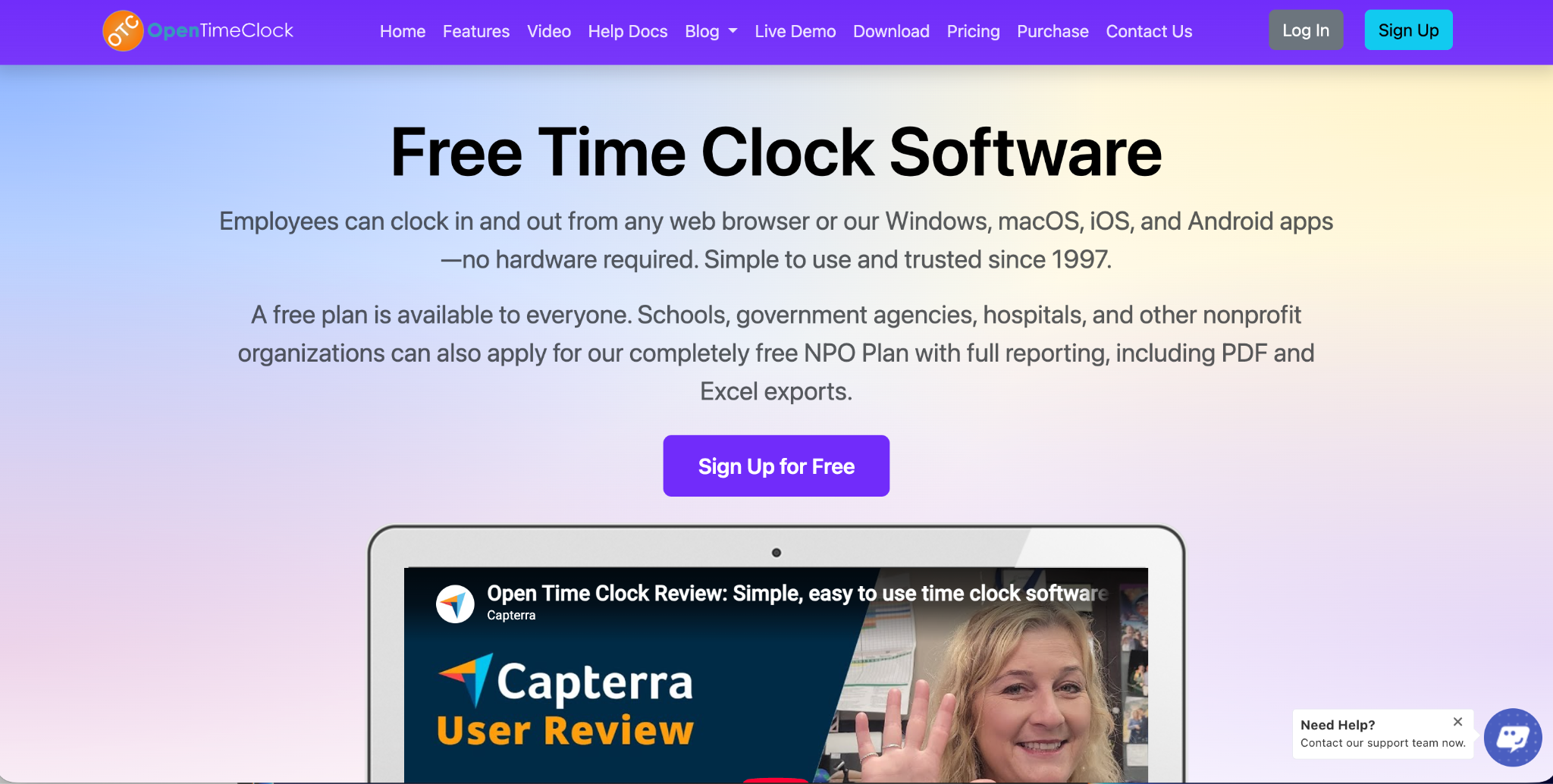
OpenTimeClock: The Free Alternative With Superior Time Tracking
Many businesses comparing Findmyshift vs Sling are looking for a platform that provides solid scheduling alongside reliable time tracking. What most of them have not yet evaluated is whether a free platform can deliver both without requiring a paid subscription.
OpenTimeClock provides facial recognition clock-in using any device camera, photo capture at every clock event, GPS location recording for mobile clock-in, PIN and QR code as alternative methods, real-time attendance dashboard, automated overtime alerts, shift scheduling, PTO management, and payroll exports in multiple formats. All of this is completely free with no per-user fees and no subscription required.
The time tracking verification depth that OpenTimeClock provides as a standard free feature, including facial recognition and photo audit trails, exceeds what either Findmyshift or Sling provides without additional paid tiers or hardware.
Scheduling in OpenTimeClock
OpenTimeClock's shift scheduling feature allows managers to create fixed and rotating shifts, assign employees to specific shifts, set clock-in window restrictions, publish schedules digitally, and use reusable weekly templates for consistent schedule patterns.
Employees can view their upcoming schedule from their personal portal on any device and receive notifications when schedules are updated or changed. Managers receive automated alerts when scheduled employees do not clock in within the expected window of their shift start time.
The scheduling functionality covers the core needs of most small and medium businesses. It is not as visually polished as Sling's drag-and-drop interface, and it does not have Findmyshift's specific international payroll integrations. But for businesses that need functional scheduling connected directly to verified time tracking and payroll exports, OpenTimeClock provides everything required at zero cost.
PTO Management and Leave Tracking
Both Findmyshift and Sling include leave management features. Findmyshift allows employees to request days off and managers to approve or decline. Sling includes similar functionality with the addition of PTO balance tracking on higher tiers.
OpenTimeClock includes comprehensive PTO management with configurable accrual rules, multiple leave types, employee self-service balance checking through the personal portal, manager approval workflows with instant notifications, and automatic balance updates on approval. PTO data integrates directly with payroll exports so that approved leave is reflected accurately in compensation calculations.
For most small businesses, OpenTimeClock's PTO management is more comprehensive than what either Findmyshift or Sling provides on their entry-level paid plans.
Payroll Integration and Export
All three platforms support some form of payroll export or integration. Findmyshift integrates with a small number of payroll providers and offers basic export functionality. Sling integrates with payroll providers and POS systems commonly used in the restaurant and retail industries.
OpenTimeClock generates payroll-ready exports in CSV, XLSX, PDF, and IIF formats that are compatible with virtually any payroll software or accountant workflow. The export includes verified hours, overtime calculations, PTO, project allocations, and all other data elements that payroll processing requires.
For businesses that use an external payroll provider or accountant, OpenTimeClock's export approach covers the payroll handoff completely at zero cost.
Total Cost Comparison
The cost comparison in the Findmyshift vs Sling evaluation becomes even more significant when OpenTimeClock is included.
Findmyshift's team plan for up to twenty employees costs approximately forty to fifty dollars per month. Over three years, this represents fourteen hundred to eighteen hundred dollars.
Sling's Business plan for twenty-five employees at four dollars per user costs one hundred dollars per month. Over three years, this represents three thousand six hundred dollars.
OpenTimeClock costs zero dollars over three years, regardless of team size.
For businesses where the ongoing subscription cost is a real budget consideration, particularly small businesses operating on tight margins, the cost difference between either paid platform and OpenTimeClock is decisive.
Which Platform Should You Choose
The Findmyshift vs Sling decision and the broader question of which platform to choose depends on your specific priorities.
Choose Findmyshift if you are outside the United States, particularly in the UK or Australia, and need a scheduling platform with relevant local integrations, and if the team-based flat pricing model is more predictable for your budget than per-user pricing.
Choose Sling if scheduling interface quality and team communication are your primary priorities, your team is large enough that the per-user cost is manageable, and the restaurant or retail POS integrations are relevant to your specific business.
Choose OpenTimeClock if accurate, verified time and attendance tracking is your primary need alongside functional scheduling, you want to eliminate time fraud through facial recognition, and you want professional-grade workforce management without any subscription cost. For most small and medium businesses, OpenTimeClock delivers more value than either platform in the Findmyshift vs Sling comparison at zero cost.

Conclusion
Findmyshift vs Sling is a comparison between two legitimate scheduling platforms that both fall short on time tracking verification and both require ongoing subscription costs. For businesses that prioritize time tracking accuracy alongside scheduling, and particularly for businesses where the subscription cost is a real operational expense, OpenTimeClock provides a more complete solution at no cost.
Sign up for free at OpenTimeClock and experience professional scheduling, verified time tracking, PTO management, and payroll exports from your very first pay period.
FAQ’s
Q1. What is the main difference between Findmyshift vs Sling?
In the Findmyshift vs Sling comparison, Findmyshift is an older, UK-oriented scheduling platform with flat team-based pricing and basic time tracking. Sling is a more modern US-focused platform with a polished drag-and-drop scheduling interface and stronger team communication features but per-user pricing.
Q2. Does Findmyshift or Sling have better time tracking verification?
Neither platform matches dedicated time clock verification. Sling's Business plan includes GPS and photo capture. Findmyshift's time tracking is more basic with no biometric verification. OpenTimeClock provides facial recognition using any device camera, photo capture at every clock event, and GPS recording as standard free features, making it the strongest option on verification in the Findmyshift vs Sling comparison.
Q3. Is there a genuinely free alternative to Findmyshift vs Sling?
Yes. OpenTimeClock is completely free with no credit card required. The free plan includes facial recognition clock-in, photo capture, GPS mobile clock-in, shift scheduling, PTO management with configurable accrual, overtime calculation and alerts, real-time attendance dashboard, and payroll exports in multiple formats.
Q4. Which businesses should choose OpenTimeClock over Findmyshift vs Sling?
Businesses that need verified time and attendance records with strong fraud prevention, functional scheduling, PTO management, and payroll exports should choose OpenTimeClock. This includes most small and medium businesses in retail, restaurants, healthcare, hospitality, and professional services where the ongoing subscription cost of either Findmyshift vs Sling platform is a meaningful budget consideration.
Q5. How does OpenTimeClock's pricing compare to Findmyshift vs Sling?
Findmyshift's team plan costs approximately forty to fifty dollars per month. Sling's Business plan costs around four dollars per user per month. For a twenty-five person team, Sling costs one hundred dollars per month and over three thousand dollars over three years. OpenTimeClock is completely free with no per-user fees, no subscription tiers, and no hidden costs.