Are Biometric Attendance Solutions Cost-Effective for Businesses in 2026?
Find out if biometric attendance in office is worth the investment in 2026. Compare costs, benefits, and why OpenTimeClock is the smartest free solution today.
Five years ago, if you told a small business owner that they could implement a facial recognition attendance system at their office, they would likely assume you were talking about technology reserved for large corporations with significant technology budgets. Biometric attendance systems were seen as premium, expensive, and complex. Something for airports, government agencies, and major enterprises, not for a fifty-person accounting firm or a regional retail chain.
In 2026, that perception is completely outdated. Biometric attendance in office environments has become accessible to businesses of every size, in every industry, at a fraction of the cost that it carried even three years ago. The technology has matured. The hardware requirements have dropped dramatically. And cloud-based platforms have made deployment faster and simpler than ever before.
This article answers that question thoroughly. We will look at what biometric attendance in office solutions actually cost in 2026, what financial benefits they deliver, how those benefits compare to the investment, which types of businesses see the strongest returns, and how OpenTimeClock makes biometric attendance available for free as part of a complete workforce management platform.

What Biometric Attendance in Office Actually Involves in 2026
Before assessing cost-effectiveness, it is important to be clear about what biometric attendance in office solutions actually looks like in 2026, because the reality is quite different from what many people imagine.
Biometric attendance does not require expensive dedicated hardware terminals with built-in fingerprint scanners or iris readers. In 2026, the most widely used form of biometric attendance is facial recognition, and it runs on the camera built into any modern tablet, iPad, smartphone, or computer. The biometric processing happens in software, not in specialized hardware.
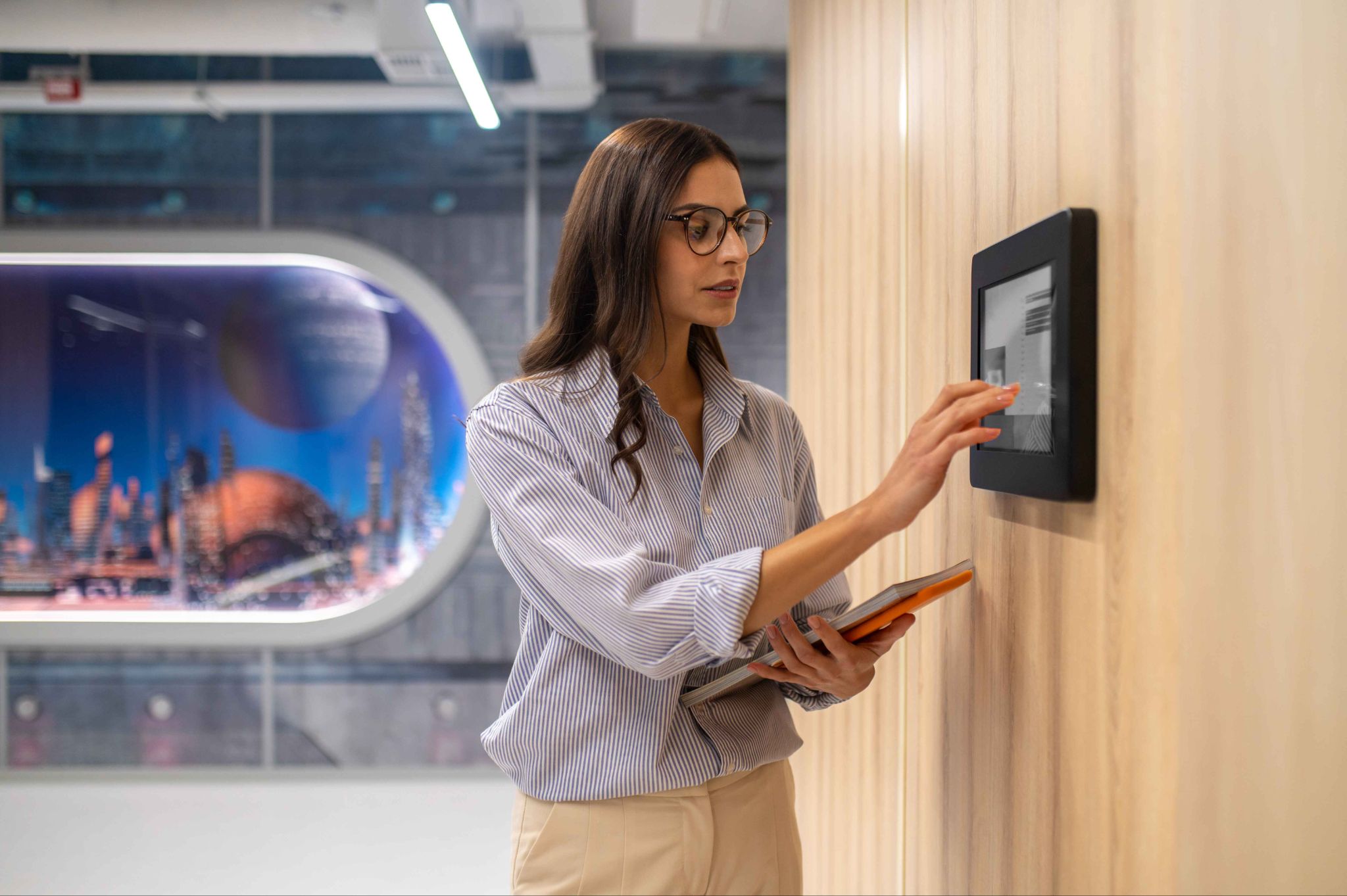
This means that a business implementing facial recognition attendance today can use devices it already owns. A tablet mounted near the office entrance, a laptop on the reception desk, or a smartphone on a charging stand can all serve as a fully functional biometric time clock without any additional hardware purchase.
OpenTimeClock delivers this entire capability through its free platform. Any business can implement facial recognition attendance in its office using the devices it already has, without spending any money on software, hardware, or implementation.
The Real Costs That Businesses Should Account For
Even when the software is free, businesses should account for all costs honestly when evaluating any new system implementation. Here is a realistic breakdown of what biometric attendance in office actually costs in 2026.
Device costs. If your office does not already have a suitable tablet or device to serve as the attendance kiosk, you will need to purchase one. A basic Android tablet or iPad that works perfectly as a facial recognition attendance station can be purchased for between one hundred and three hundred dollars depending on the model. Many businesses already have suitable devices on hand.
Mounting and setup. A wall mount or desktop stand for the attendance tablet typically costs between twenty and eighty dollars. The physical setup of the device at the office entrance takes less than an hour.
Employee enrollment time. Enrolling each employee in the facial recognition system typically takes one to two minutes per person. For a team of fifty employees, this is roughly two hours of collective time during the initial rollout.
Manager training. Learning to use OpenTimeClock as a manager is straightforward. Most managers are comfortable with the dashboard and reporting features within a day of getting access.
Ongoing costs. For a SaaS platform like OpenTimeClock that is free to use, the ongoing costs are essentially zero. There are no subscription fees, no maintenance costs, no hardware replacement cycles beyond normal device lifespan, and no upgrade fees.
The Financial Benefits That Drive Return on Investment
Comparing these costs against a traditional PIN-based or paper-based attendance system, or against a proprietary dedicated biometric terminal, the financial case for cloud-based facial recognition attendance is clear.
The cost side of the analysis is only half of the cost-effectiveness equation. The benefit side is where the real argument for biometric attendance in office is made. Here are the specific financial benefits that businesses can expect.
Elimination of buddy punching. This is the biggest single source of financial return for most businesses. Buddy punching, where employees clock in for absent colleagues, is a form of time theft that research suggests costs businesses between two and eight percent of their total payroll. For a business with a monthly payroll of fifty thousand dollars, even the conservative end of that range represents one thousand dollars per month of preventable loss.
Reduction in time theft through late arrivals and early departures. Beyond buddy punching, accurate attendance tracking eliminates the softer forms of time theft where employees claim to arrive earlier or leave later than they actually do. When every clock-in is verified with a photo and a timestamp, employees cannot inflate their hours through imprecise manual recording.
Payroll accuracy and reduced correction costs. Manual or PIN-based attendance systems produce timesheet errors that consume HR and payroll time to correct. OpenTimeClock generates accurate, verified attendance records automatically, which means payroll corrections become rare. The HR and payroll time saved by eliminating routine corrections has a real financial value that compounds over time.

Comparing the Cost-Effectiveness of Different Biometric Solutions
Not all biometric attendance in office solutions are equally cost-effective in 2026. There is significant variation in cost, capability, and ongoing value across different types of solutions.
Proprietary dedicated biometric terminals are standalone hardware devices with built-in biometric sensors, typically fingerprint or facial recognition, that are sold as a complete unit. These devices typically cost between three hundred and fifteen hundred dollars per unit, require professional installation, need periodic maintenance, and are usually tied to a proprietary software system with ongoing licensing costs.
Fingerprint scanner integrations involve connecting fingerprint scanners to existing computers or networks. These have lower hardware costs than dedicated terminals but require driver installation, IT configuration, and face hygiene concerns that have become more significant since the COVID-19 period.
Cloud-based facial recognition platforms like OpenTimeClock use the cameras of existing devices and deliver biometric functionality through software alone. Hardware costs are zero if suitable devices already exist. Software costs are zero with a free platform. Implementation costs are minimal. And ongoing costs are essentially zero.
Which Types of Businesses Benefit Most From Biometric Attendance in 2026
While biometric attendance in office delivers benefits for almost any business with employees, some types of organizations see particularly strong returns based on their specific characteristics.
Businesses with high headcount in a single location. When many employees are clocking in and out through the same system every day, the risk of buddy punching and the value of accurate automated attendance records is higher. A fifty-person office or a hundred-person warehouse sees proportionally larger benefits than a five-person team.
Businesses with high staff turnover. Industries like retail, hospitality, and logistics often have significant staff turnover. Implementing biometric attendance in office or warehouse settings in these environments means the system adapts automatically to new employees through the enrollment process, with no need to issue cards, assign PINs, or manage credentials.
Businesses with multiple shifts. Shift-based businesses where attendance must be tracked precisely for payroll and compliance purposes benefit strongly from the accuracy and verification that biometric attendance provides. OpenTimeClock's shift scheduling feature connects biometric attendance directly to shift management, giving managers real-time visibility into whether every shift is fully covered.
Addressing the Common Concerns About Biometric Attendance
Despite its cost-effectiveness, some businesses hesitate to implement biometric attendance in office because of concerns that deserve direct and honest answers.
Privacy concerns. Some employees are uncomfortable with the idea of their biometric data being collected and stored. This concern is legitimate and should be addressed transparently. Modern facial recognition systems like OpenTimeClock store facial data as encrypted mathematical models rather than recognizable photographs. The system cannot reconstruct a photograph from the stored data.
Accuracy concerns. Some businesses worry that facial recognition will not work reliably for all employees, particularly in varied lighting conditions or for employees whose appearance changes significantly due to illness, aging, or accessories. In practice, modern facial recognition technology is highly accurate across a wide range of conditions.
Legal concerns. In some jurisdictions, collecting biometric data is subject to specific legal requirements such as written employee consent, data retention limits, or specific storage standards. Before implementing biometric attendance, businesses should verify the applicable requirements in their location and ensure their implementation meets them. OpenTimeClock can be configured to support compliant biometric data collection as part of a properly documented implementation.
Calculating Your Own Return on Investment
The best way to assess whether biometric attendance in office is cost-effective for your specific business is to calculate the return on investment using your own numbers. Here is a simple framework.
Start with the cost of buddy punching and time theft in your business. If you do not know this number, use the conservative industry estimate of two percent of your total payroll as a starting point. For a business with an annual payroll of five hundred thousand dollars, that is ten thousand dollars per year.
Add the cost of attendance-related payroll errors. Estimate how many hours per month your HR and payroll team spends correcting timesheet errors and multiply by their hourly cost. Add the cost of unplanned overtime. Look at your overtime spending over the past year and estimate what percentage could have been avoided with real-time alerts and better visibility.
These three numbers combined represent the annual cost of inadequate attendance management. Compare this against the total cost of implementing biometric attendance through OpenTimeClock, which is primarily the cost of a tablet if you do not already have one. The payback period for most businesses is measured in weeks, not years.
Why OpenTimeClock Is the Most Cost-Effective Biometric Attendance Solution in 2026
OpenTimeClock delivers everything a business needs for professional-grade biometric attendance in office environments at zero cost. It uses the camera of any existing device for facial recognition clock-in. It captures a photo at every clock-in for visual verification. It records GPS location to support multi-site and remote workforce management.
The platform works on any device running iOS, Android, Windows, MacOS, or any modern browser. It supports multiple clock-in methods so every type of employee in every type of workplace can be accommodated. It maintains all attendance records securely in the cloud with full audit trail functionality. And it is completely free to start with no credit card required.
For businesses that are weighing the cost-effectiveness of biometric attendance in 2026, the analysis with OpenTimeClock is straightforward. The benefits in terms of eliminated time theft, improved payroll accuracy, and reduced overtime are real and measurable. The costs are minimal. The return on investment is fast and ongoing.
Sign up for free at OpenTimeClock and experience professional-grade biometric attendance management at zero cost from your very first day.
Conclusion
Biometric attendance in office environments is unquestionably cost-effective for the vast majority of businesses in 2026. The technology has become simple, accessible, and in many cases completely free. The financial benefits in terms of eliminating time fraud, improved accuracy, and better workforce management are well documented and measurable. And the risks and concerns that once made businesses hesitant have been addressed through better technology, clearer communication, and more thoughtful implementation practices.
The question for most businesses in 2026 is not whether to implement biometric attendance but why they have not already done so. With OpenTimeClock making the full capability available for free, there is no longer a meaningful financial barrier to getting started.
FAQ’s
Q1. Is biometric attendance in office cost-effective for small businesses in 2026?
Yes. Biometric attendance in offices has become highly cost-effective for businesses of all sizes in 2026 because modern facial recognition runs on existing devices rather than requiring expensive dedicated hardware.
Q2. Does biometric attendance require expensive dedicated hardware?
No. Modern biometric attendance in office solutions like OpenTimeClock use the built-in camera of any existing tablet, iPad, smartphone, or computer. There is no need to purchase dedicated biometric terminals.
Q3. How does OpenTimeClock handle employee privacy with biometric data?
OpenTimeClock converts facial images into encrypted mathematical models rather than storing recognizable photographs. The stored data cannot be reversed into an identifiable image. All data is held in secure, encrypted cloud servers with role-based access controls.
Q4. What is the typical return on investment timeline for biometric attendance?
For most businesses, the payback period for implementing biometric attendance in office is very short, often weeks rather than months, because the primary benefit, eliminating buddy punching and time theft, produces immediate ongoing savings from day one.
Q5. Is OpenTimeClock free for businesses that want to implement biometric attendance in the office?
Yes. OpenTimeClock is completely free to use with no credit card required. The free plan includes full facial recognition clock-in, photo capture at every attendance event, GPS location recording, real-time attendance dashboard, shift scheduling, PTO management, overtime alerts, detailed reporting, and payroll exports.