10 Benefits of Real-Time Attendance Tracking for Businesses
Discover the top 10 benefits of real-time attendance tracking and how it helps businesses reduce costs, improve accuracy, and manage teams more effectively.
Most businesses track attendance in some form. But there is a big difference between tracking attendance after the fact and knowing what is happening right now.
Traditional attendance methods, like paper timesheets and manual spreadsheets, tell you what happened last week. By the time the data reaches your desk, it is too late to act on it. Shifts have already been uncovered. Overtime has already been paid. Mistakes have already made it into payroll.
Real-time attendance tracking changes that completely. Instead of looking backward, you are looking at what is happening right now. Who is clocked in. Who is late. Who has not shown up. All of this is visible the moment it happens.
This article covers the 10 most important benefits of real-time attendance tracking for businesses of any size and explains how each one saves time, reduces cost, and improves operations.
What Is Real-Time Attendance Tracking?
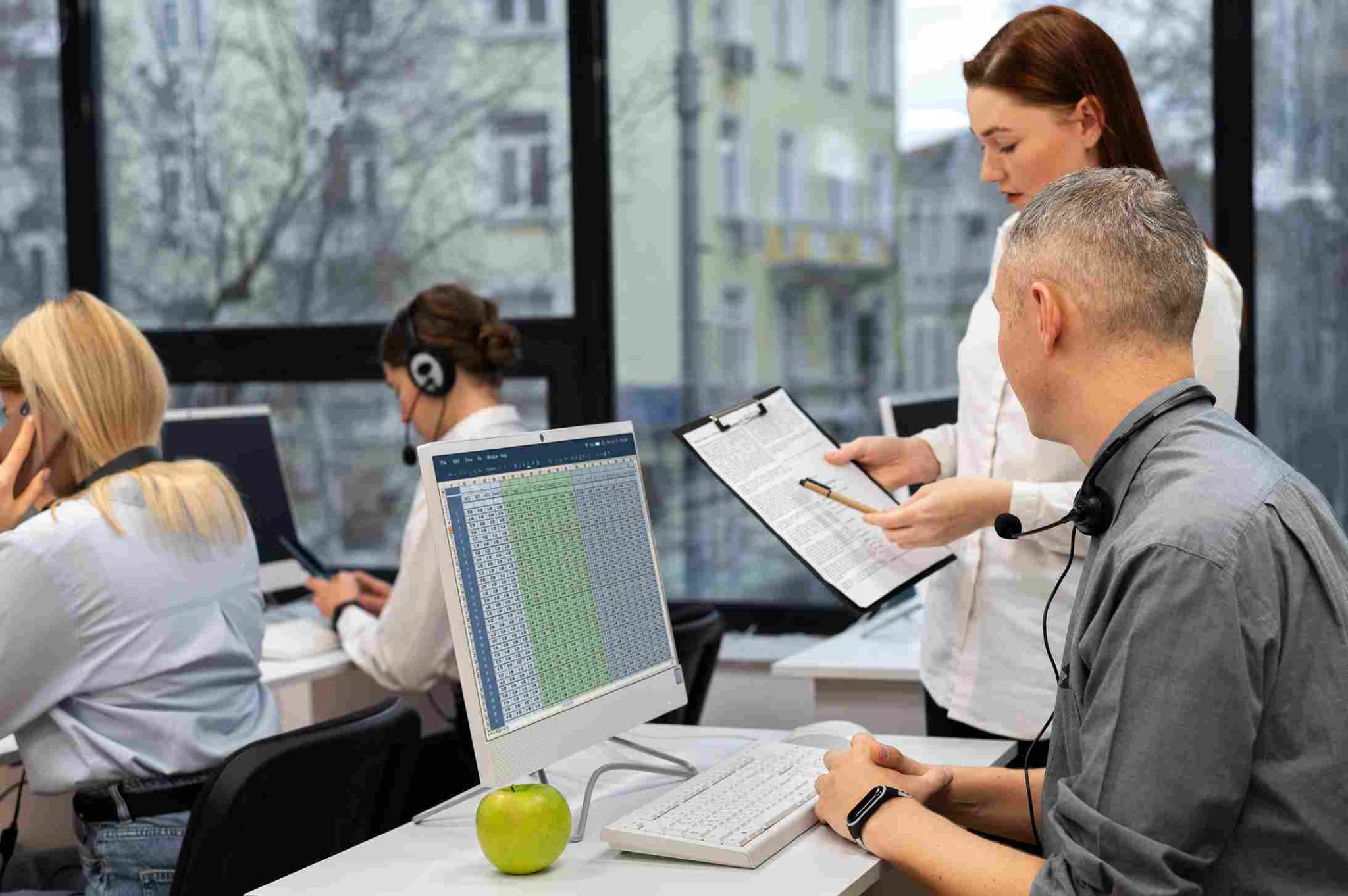
Real-time attendance tracking is a system that records and displays employee clock-in and clock-out data as it happens. The moment an employee clocks in from any device, that record appears instantly in the manager's dashboard. There is no delay. No waiting for timesheets to be collected. No manual entry needed.
Managers can see at any moment which employees are currently working, which have finished their shift, and which have not yet arrived. They can view this data from any device including a phone, tablet, or computer. And they can act on it immediately.
This live visibility is what separates real-time systems from traditional attendance methods. It gives managers the information they need exactly when they need it, not hours or days later.
Benefit 1: You See Problems the Moment They Happen
With a traditional attendance system, a missed shift might not be noticed until the end of the day, or even until payroll week. By then, the operational damage is done and the financial impact is already recorded.
With real-time attendance tracking, a missed clock-in is visible immediately. The moment a shift starts without a clock-in, the manager can see it. They can reach out to the employee, arrange cover, and prevent the shift from going uncovered.
This early detection is one of the most valuable aspects of real-time visibility. Problems that used to spiral into operational crises can now be caught and resolved in minutes. A single absent employee does not have to derail an entire shift when you know about it from the start.
Open Time Clock gives managers a live attendance dashboard that updates automatically as employees clock in and out. The moment a scheduled clock-in is missed, it is visible on the screen. Managers can act immediately without waiting for someone to notify them.
Benefit 2: Payroll Accuracy Improves Significantly
Payroll errors are expensive. Overpaying employees means money leaves the business that should not. Underpaying employees creates legal liability and damages trust. Both types of errors take time to discover and correct.
Most payroll errors start with inaccurate time data. Employees fill in timesheets from memory. Numbers are transferred incorrectly from one system to another. Hours are rounded incorrectly. And by the time payroll is processed, the original data has been through so many hands that errors are almost inevitable.
Real-time attendance tracking eliminates most of these steps. Every clock-in and clock-out is recorded automatically with a precise timestamp. The data goes directly from the time tracking system into the payroll report without any manual entry. What you record is what gets paid.
Benefit 3: Overtime Is Caught Before It Becomes Costly
Overtime is one of the most significant controllable costs in any payroll budget. But it can only be controlled if you know about it before the hours accumulate.
In a traditional attendance system, you find out about overtime when you add up the timesheets at the end of the week. By then it is too late to do anything about it. The hours were worked. The cost is locked in.
With real-time tracking, you can see how many hours each employee has worked so far this week right now. If someone is approaching their overtime threshold on Thursday afternoon, you know it. You can adjust Friday's schedule to prevent those extra hours from crossing the threshold.
This proactive management of overtime can save businesses thousands of dollars per year. Not by preventing all overtime, but by preventing unplanned overtime that was never budgeted for and could have been avoided with a simple schedule adjustment.
Open Time Clock calculates overtime automatically based on your configured rules. Managers receive real-time alerts when any employee is approaching their overtime threshold. This gives managers the warning they need to act before the cost is incurred rather than after.
Benefit 4: Managers Can Lead From Anywhere
Managing a team used to require being physically present. If you were not on the floor, you did not know what was happening. Remote management meant phone calls and hoping your team was telling you the full picture.
Real-time attendance tracking removes the need for physical presence. A manager can check the live attendance dashboard from their phone while traveling, from a home office, or from a head office hundreds of miles from the nearest team.
They can see who is clocked in at every location. They can verify that coverage is adequate for the current period. They can check whether any alarms have been triggered by unusual attendance patterns. All of this is available from any device with an internet connection.
Benefit 5: Employee Accountability Increases Naturally
When employees know their attendance is recorded the moment they clock in, behavior changes without any confrontation. The system itself creates accountability.
In workplaces with no real-time tracking, it is easy to arrive a few minutes late and write the correct time on a paper sheet. Nobody notices. Nothing happens. Over time, this habit becomes ingrained.
When every clock-in is recorded automatically with a precise timestamp, that option disappears. The time is what it is. Employees know this. They also know that their manager can check the records at any time.
This awareness does not feel like surveillance to most employees. It feels like fairness. The same rules apply to everyone. Nobody gets away with something that others would be held accountable for. That fairness builds a more equitable and productive workplace culture.

Benefit 6: Data Is Always Ready for Compliance and Audits
Labor laws require businesses to keep accurate records of hours worked. In many jurisdictions, these records must be available for inspection at any time. If a wage dispute arises or a labor authority requests records, you need to produce them quickly and accurately.
With paper timesheets, this means digging through filing cabinets or spreadsheets looking for records that may be incomplete, illegible, or missing. With a digital real-time tracking system, every record is stored automatically in the cloud from the moment it is created.
You can search any date range for any employee in seconds. You can export the records in a format ready for legal or regulatory review. And because the records were never manually handled, they are less likely to contain errors or inconsistencies.
Open Time Clock stores all attendance records securely in the cloud with a full audit trail. Every change to a record is logged automatically. Managers can export detailed reports in PDF or Excel format for any employee, department, or date range. These reports are ready for any audit or compliance review without any additional preparation.
Benefit 7: Shift Coverage Problems Are Resolved Faster
When a coverage gap appears, speed matters. The sooner you know about it, the more options you have. If you find out at 7:45 a.m. that a 8:00 a.m. shift is uncovered, you have 15 minutes to arrange something. If you find out at 10:00 a.m. that the shift has been running short-staffed since 8:00 a.m., your options are much more limited.
Real-time attendance tracking gives you that early warning. The moment a scheduled shift starts without a clock-in, you know. You can immediately contact the absent employee, reach out to someone available to cover, or adjust the workflow for the remaining team while you arrange cover.
Faster response to coverage gaps means less operational disruption. Service levels stay higher. Other employees are not stretched as thin. And the financial cost of the absence is minimized because the gap is closed more quickly.
Benefit 8: Remote and Field Teams Are Managed With Confidence
Managing employees who work away from a central office has always been challenging. When a field worker says they arrived at a job site at 8:30 a.m., how do you verify that? When a remote employee claims they worked a full day, what proof do you have?
Real-time attendance tracking with GPS verification answers these questions automatically. When a field worker clocks in, the system records both the time and the GPS location. The manager can see exactly where the employee was when they started work.
Geofencing adds another layer. If the employee tries to clock in from a location outside the approved work zone, the system blocks the attempt. Only legitimate clock-ins from approved locations go through.
Open Time Clock records the GPS address of every mobile clock-in. Managers can view a map showing where each employee was when they started and finished their shift. Geofencing restrictions prevent clock-ins from unapproved locations. All of this is visible in real time from the central dashboard.
Benefit 9: It Integrates Directly With Payroll to Save Hours Every Pay Period
The connection between attendance data and payroll has traditionally been one of the most time-consuming steps in the entire payroll process. Someone has to collect all the time data, calculate the hours, check for overtime, apply the right pay rates, and enter everything into the payroll system. Each step takes time and introduces the possibility of error.
When your real-time attendance tracking system integrates directly with your payroll platform, most of those steps disappear. The hours are already recorded. The overtime is already calculated. The pay rates are already applied. At the end of the pay period, the manager reviews the report and exports it directly to payroll.
What used to take several hours can now take 15 minutes. The time saved adds up to dozens of hours per year for a single manager. And because the data flows directly without manual re-entry, errors are eliminated at every step.
Open Time Clock integrates with QuickBooks, ADP, Gusto, Xero, and other major payroll platforms. Attendance data from all employees and all locations flows directly into your payroll system. No manual transfer. No re-entry. No transcription errors. Just clean, accurate payroll data ready to process.
Benefit 10: It Supports Better Decision-Making at Every Level
All of the benefits described above have one thing in common. They give decision-makers better information. And better information leads to better decisions.
A manager who can see real-time attendance data makes better shift coverage decisions. A payroll manager who has accurate, automated time records makes fewer errors. A finance director who can see overtime trends across the entire organization makes better staffing decisions. A business owner who can see attendance patterns across all locations makes better investment decisions about where to add headcount.
Real-time attendance tracking is not just an operational tool. It is a source of business intelligence. The data it generates, when reviewed consistently and acted upon, makes every level of management more effective.
The businesses that get the most from real-time tracking are not the ones that just use it for payroll. They are the ones that use it to understand their workforce and make smarter decisions every week.
Conclusion
Real-time attendance tracking is one of the highest-value improvements any business can make to its workforce management. It saves time, reduces errors, controls costs, and gives managers the visibility they need to lead effectively.
The technology is straightforward. The setup is fast. And for most businesses, the platform is free.
Every day you spend managing attendance with paper timesheets or end-of-week summaries is a day you are operating without the information you need. The problems you could have caught on Monday are not discovered until Friday. By then the cost is already paid.
Start your free account at Open Time Clock today and give your management team the real-time visibility they need to run your workforce smarter.
FAQ’s
1. What is real-time attendance tracking and how is it different from traditional methods?
Real-time attendance tracking records employee clock-ins and clock-outs instantly and displays them on a live dashboard as they happen. Traditional methods like paper timesheets or manual spreadsheets collect data that is reviewed after the fact, often days later.
2. How does real-time attendance tracking help control overtime costs?
Real-time tracking shows managers exactly how many hours each employee has worked so far during the current pay period. When an employee is approaching their overtime threshold, the system sends an alert.
3. Can real-time attendance tracking work for remote and field employees?
Yes. Modern real-time tracking systems include GPS-based clock-in through mobile apps. When a remote or field employee clocks in, the system records both the time and their GPS location. Managers can see exactly where each employee was when they started work. Geofencing can be used to restrict clock-ins to approved locations only.
4. Is real-time attendance tracking suitable for small businesses?
Yes. Real-time tracking is valuable for businesses of any size. Even a team of five benefits from knowing immediately when someone is absent rather than finding out hours later.
5. How does Open Time Clock support real-time attendance tracking?
Open Time Clock provides a live attendance dashboard that updates automatically as employees clock in and out from any device. Managers can see who is currently working, who has clocked out, and who has not yet arrived from any browser or mobile device.